Introduction
Large-scale pipeline projects require steel pipes with high strength, stable weld quality, and long service life. Whether used for oil and gas transportation, water supply, or offshore engineering, pipes must withstand high pressure, harsh environments, and long-term operation.
Among various welded steel pipes, LSAW steel pipe is widely used for large-diameter and high-performance pipeline applications. Its straight longitudinal weld, advanced welding technology, and accurate dimensional control make it suitable for demanding projects.
But what exactly is LSAW pipe? How is it manufactured, and what factors should buyers consider before purchasing? Understanding its production process, applications, and selection criteria can help engineers and procurement teams choose the right solution.
What Is LSAW Steel Pipe?
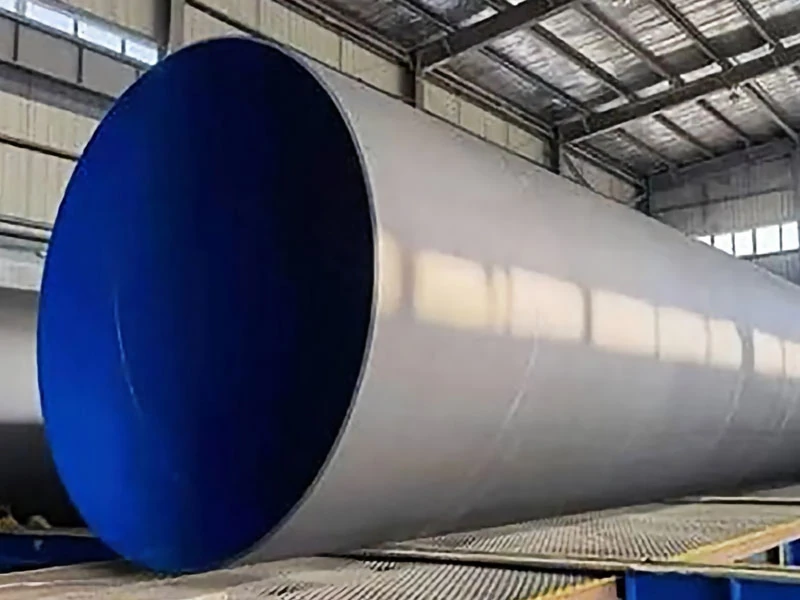
LSAW steel pipe (Longitudinal Submerged Arc Welded Pipe) is a welded steel pipe made from steel plates. During manufacturing, the steel plate is formed into a cylindrical shape, and the longitudinal seam is welded using submerged arc welding technology.
Unlike SSAW steel pipe, which has a spiral weld seam, LSAW pipe features a straight longitudinal weld. This structure allows better control of pipe dimensions and weld quality.
Because of its large diameter capability and reliable mechanical performance, LSAW steel pipe is commonly used in oil and gas pipelines, water transmission projects, offshore engineering, and large structural applications.
How Is LSAW Steel Pipe Manufactured?
LSAW steel pipe is mainly produced from high-quality steel plates. The manufacturing process includes plate forming, submerged arc welding, inspection, and anti-corrosion treatment.
Steel Plate Forming
The process starts with selecting suitable steel plates based on project requirements, including pressure conditions, service environment, and mechanical performance.
For large-diameter LSAW pipes, manufacturers often use the JCOE forming process. The steel plate is pressed step by step and successively formed into “J” shape, “C” shape and open “O” shape to complete the forming of the round tube blank. The subsequent diameter expansion process ensures dimensional accuracy.
Double-Sided Submerged Arc Welding
After forming, the longitudinal seam is welded from both the inside and outside of the pipe. During submerged arc welding, welding flux covers the welding area to protect the molten metal and improve weld stability.
Compared with other welding methods, submerged arc welding provides consistent weld quality and is suitable for manufacturing large-diameter pipes used in high-pressure applications.
Quality Inspection and Anti-Corrosion Coating
Before delivery, each LSAW pipe undergoes strict inspection to confirm its quality and performance. Common tests include hydraulic testing, ultrasonic testing (UT), and weld inspection.
For pipelines exposed to corrosive environments, coatings such as 3PE, FBE, and epoxy coatings can be applied. These protective layers help reduce corrosion risks and extend pipeline service life in underground, offshore, and coastal conditions.
Where Are LSAW Steel Pipes Used?
LSAW steel pipes are mainly used in projects that require large diameters, high strength, and reliable performance. Their common applications include oil and gas transportation, water infrastructure, and structural engineering.
Oil and Gas Pipelines
The oil and gas industry is one of the main application areas for LSAW steel pipes. They are widely used in long-distance transmission pipelines, oil gathering pipelines, and offshore pipeline projects.
These applications require excellent weld performance and pressure resistance. LSAW pipes are often manufactured according to international standards such as API 5L to meet the requirements of pipeline transportation.
Water Transmission Projects
LSAW steel pipes are also widely used in large water supply projects, including urban water pipelines, water transfer projects, and desalination facilities.
For these applications, large diameter, corrosion resistance, and long-term durability are essential. Proper coating selection is especially important for underground and marine environments.
Structural Engineering
LSAW pipes are suitable for structural projects that require high load-bearing capacity. Typical applications include bridge foundations, steel piles, offshore structures, and support columns.
Their high strength and reliable weld performance make them a practical choice for large infrastructure projects exposed to heavy loads and challenging conditions.
How to Choose the Right LSAW Steel Pipe?
Selecting the right LSAW steel pipe requires careful evaluation of project conditions, technical specifications, manufacturing standards, and corrosion protection requirements.
Pipe Size and Steel Grade
Pipe diameter, wall thickness, and steel grade should match the project’s operating conditions.
For oil and gas pipelines, high-strength grades such as X52, X65, and X70 are commonly selected because they offer good strength and toughness for high-pressure transportation.
For structural projects, buyers should choose materials based on required load capacity, environmental conditions, and design standards.
Manufacturing Standards and Quality Documents
A qualified LSAW steel pipe supplier should manufacture products according to recognized international standards and provide complete quality documentation.
Before purchase, buyers should review important documents such as material test certificates (MTC), inspection reports, and production records. These documents help confirm product quality and ensure traceability.
Welding Quality and Inspection
The longitudinal weld is one of the most important factors affecting LSAW pipe performance. Buyers should confirm the manufacturer’s welding technology and inspection procedures before placing an order.
For demanding pipeline projects, inspection methods such as 100% ultrasonic testing (UT), hydraulic testing, and other non-destructive tests help identify possible defects and improve reliability.
Corrosion Protection
For pipelines installed underground, offshore, or in coastal areas, corrosion protection is a key consideration.
Coating options such as 3PE, FBE, and epoxy coatings provide additional protection against moisture, chemicals, and corrosion. The right coating should be selected according to the operating environment and service requirements.
Why Choose Cangtie as Your LSAW Steel Pipe Supplier?
Choosing an experienced LSAW steel pipe manufacturer is important for ensuring consistent quality, reliable delivery, and long-term pipeline performance. Cangtie provides large-diameter welded steel pipes with strict control over manufacturing processes and quality inspection.
Wide Product Range for Different Applications
Cangtie supplies LSAW steel pipes for oil and gas pipelines, water transmission projects, structural engineering, and other large-scale applications.
Different pipe sizes, steel grades, and coating options are available to meet various project requirements.
| Parameter | Specification Details |
| Standard Compliance | API 5L(PSL1/PSL2)、ASTM A671、ASTM A672 GB/T 9711 |
| Material Grade | Gr.B, X42, X52, X60, X65, X70, X80, S355JR |
| Outer Diameter (OD) | 406 mm to 1626 mm |
| Wall Thickness (WT) | 6 mm to 60 mm |
| Length Options | 6.0 m to 12.5 m (standard or customized lengths) |
| Welding Process | Double-sided Submerged Arc Welding (DSAW) |
| Surface Treatment | Bare, black paint, 3PE, FBE coating, galvanized |
Advanced Manufacturing and Strict Quality Control
Cangtie uses the JCOE forming process and longitudinal submerged arc welding technology to manufacture LSAW steel pipes.
This production method helps maintain accurate dimensions and stable mechanical properties, especially for large-diameter pipes used in high-pressure applications.
During manufacturing, each pipe undergoes strict inspection. Hydraulic testing verifies pressure resistance, while 100% ultrasonic testing is performed on weld seams to detect possible defects.
These quality control measures help ensure that each pipe meets project requirements before shipment.
Solutions for Challenging Pipeline Conditions
LSAW steel pipes are often used in projects exposed to high pressure, low temperatures, and corrosive environments. Different operating conditions require suitable material grades, welding methods, and coating solutions.
For cold regions and low-temperature applications, high-strength grades such as X52, X65, and X70 provide improved toughness and reliability.
For underground and coastal environments, anti-corrosion coatings such as 3PE, 2PE, and FBE help protect pipes from moisture, salt spray, and corrosion damage.
With advanced forming technology, reliable welding processes, and strict inspection procedures, Cangtie LSAW steel pipes provide dependable solutions for oil and gas pipelines, water transmission projects, and large infrastructure construction.
FAQ
Q1. What Is LSAW Steel Pipe and How Is It Different from SSAW and Seamless Pipe?
LSAW (Longitudinal Submerged Arc Welded) steel pipe is a welded pipe made from steel plates with a straight longitudinal weld seam.
Compared with SSAW pipe, which has a spiral weld seam, LSAW pipe offers better dimensional accuracy and weld control. Compared with seamless pipe, LSAW pipe has greater advantages in large diameter production and is widely used for high-pressure pipeline projects.
Q2. What Standards Are Used for LSAW Steel Pipe?
LSAW steel pipes are commonly manufactured according to standards such as API 5L, EN 10208 and GB/T 9711.
Common steel grades include Gr.B, X42, X52, X60, X65, and X70. Products can be supplied according to PSL1 or PSL2 requirements based on project specifications.
Q3. What Are the Common Sizes of LSAW Steel Pipe?
LSAW steel pipes are commonly available in large diameters ranging from approximately 406 mm to 1626 mm, with wall thicknesses from 6 mm to 60 mm.
Standard lengths are usually 12 m or customized according to transportation and project requirements.
Q4. Does LSAW Steel Pipe Require Weld Inspection?
Yes. Weld inspection is essential for LSAW steel pipes used in pipeline applications.
Common inspection methods include 100% ultrasonic testing (UT), hydraulic testing, and other non-destructive testing methods when required by project standards.
Q5. What Coating Options Are Available for LSAW Steel Pipe?
LSAW steel pipes can be coated with 3PE, 2PE, FBE, epoxy coatings, and other anti-corrosion solutions.
These coatings help protect pipes from moisture, chemicals, and corrosion, making them suitable for underground, offshore, and harsh environmental conditions.
Q6. What Projects Are LSAW Steel Pipes Used For?
LSAW steel pipes are widely used in oil and gas pipelines, water transmission projects, offshore engineering, piling projects, and large infrastructure construction.
They are especially suitable for applications that require large diameters, high strength, and reliable weld performance.
Conclusion
LSAW steel pipe is a reliable choice for large-diameter pipeline projects that require high strength, accurate dimensions, and stable weld quality.
Its straight longitudinal weld structure, advanced submerged arc welding process, and flexible manufacturing capability make it suitable for demanding applications such as oil and gas transportation, water transmission, offshore engineering, and structural construction.
Working with an experienced LSAW steel pipe manufacturer can help ensure consistent product quality, complete technical support, and reliable solutions for long-term pipeline operation.
If you need LSAW steel pipes for your next project, contact Cangtie to discuss your requirements and find a suitable solution.