Key Takeaways
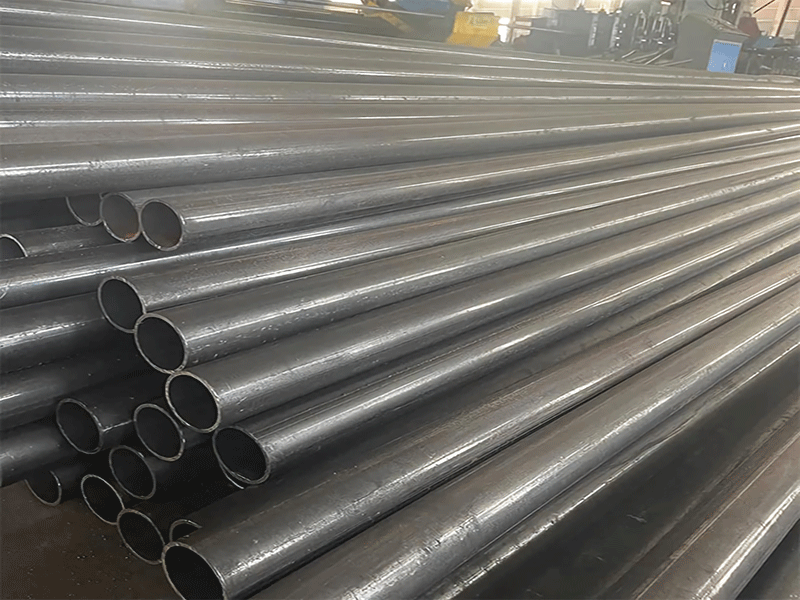
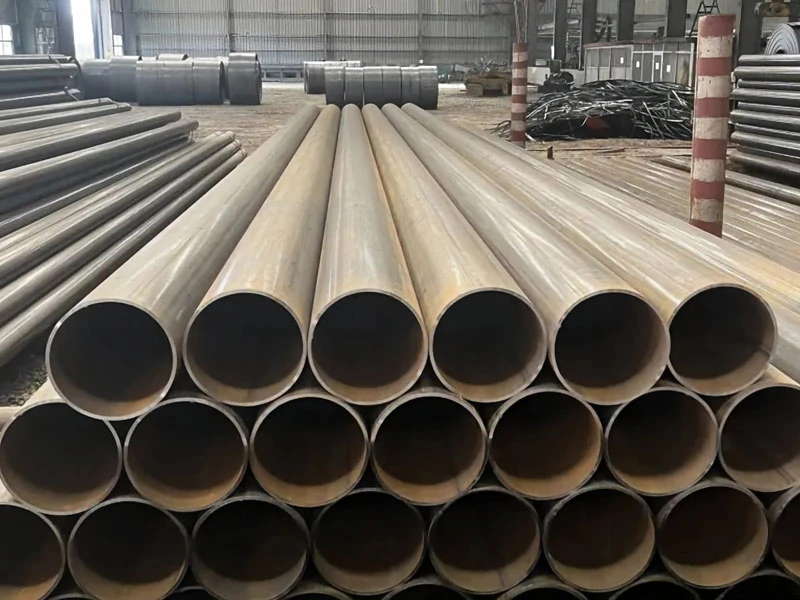
- A sonic logging pipe provides an access path for ultrasonic probes during Crosshole Sonic Logging (CSL) of foundation piles and drilled shafts.
- Q235 steel offers suitable strength and deformation resistance for pipes that must remain open during concrete placement.
- Common Q235 pipe sizes include Φ50 mm, Φ54 mm, and Φ57 mm, with wall thicknesses from 1.2 mm to 3.0 mm.
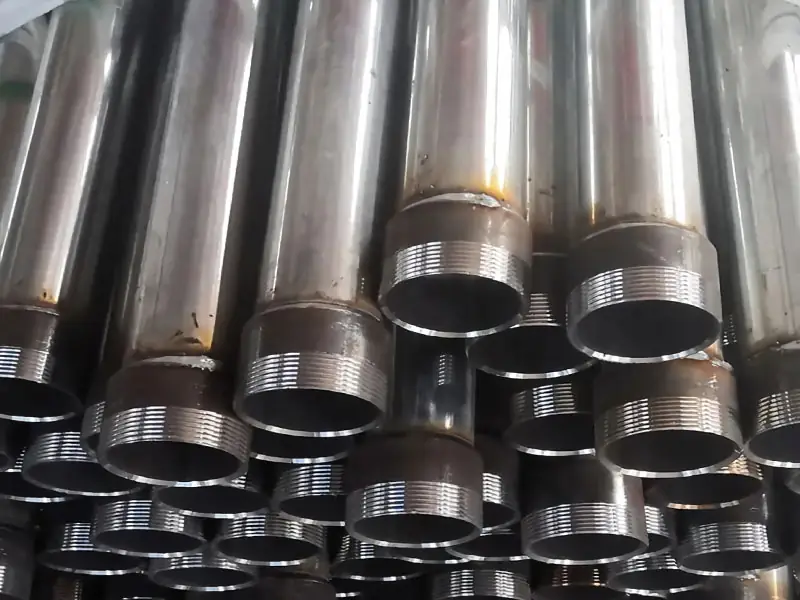
- Watertight connections are important because CSL pipes are filled with water during testing. Cangtie’s pipes and crimped joints are tested at 0.8 MPa for 30 seconds without leakage.
- Pipe diameter, wall thickness, straightness, connection type, and testing requirements should be confirmed before ordering.
- Cangtie supplies foundation pile testing pipe in different specifications and also provides OEM sonic logging pipe service for project-specific requirements.
Introduction
Foundation piles and drilled shafts are often tested after concrete placement. Engineers need to confirm that the concrete is sound before construction moves forward.
Crosshole Sonic Logging (CSL) is a common method for this purpose. During testing, ultrasonic probes are lowered through access tubes installed inside the reinforcement cage. One probe sends a signal through the concrete, while another receives it through a second tube. Changes in signal travel time or strength can indicate areas that may require further inspection.
This makes pipe selection an important part of foundation testing. The right sonic logging pipe should match the testing method and pile design. Its internal diameter should also provide enough clearance for the probe to move smoothly. Connection quality is equally important because the tubes need to remain watertight during concrete placement and testing.
What Is a Sonic Logging Pipe?
A sonic logging pipe is an access tube used for Crosshole Sonic Logging (CSL). It is installed inside the reinforcement cage before concrete is poured. After the concrete has cured, the tube is filled with water. Ultrasonic probes can then be lowered through it to assess the concrete inside the pile.
How Does Crosshole Sonic Logging Work?
Several CSL pipes are normally installed along the reinforcement cage. They must remain open after concrete placement so the probes can reach the required depth.
During a CSL test, two probes are lowered into separate tubes at the same depth. One probe sends an ultrasonic signal, while the other receives it. The probes are then moved upward together as measurements are recorded.
When the concrete is uniform, the ultrasonic response tends to remain stable. A sudden change may indicate a possible defect between the tubes. The test can also show the depth of the affected area. Engineers can then decide whether further inspection is needed.
For reliable testing, the tubes must provide a clear path for the probes. They must also hold water throughout the test. Straight tubes make probe movement easier. Watertight connections help maintain stable test conditions.
Why Is Q235 Steel Suitable for Sonic Logging Pipes?
Q235 steel is a practical choice for sonic logging pipes because the tubes need to remain stable during foundation construction. They are installed before concrete placement. Afterward, they must stay open so CSL probes can reach the required depth. The following performance data is based on Cangtie’s product information.
Stable Ultrasonic Transmission
During CSL testing, ultrasonic signals pass through the concrete between two tubes. The pipe needs to support stable signal transmission. According to Cangtie’s data, energy loss through the Q235 pipe wall is ≤5%. This helps maintain a clear signal during testing.
Strong Resistance to Deformation
The tubes may be exposed to pressure during concrete placement. If a tube becomes badly deformed, the probe may not pass through it smoothly.
Cangtie reports a yield strength of 235–275 MPa and a tensile strength of 315–500 MPa for its Q235 material. The Q235 base material meets the requirements of a 180° cold bending test without cracking and a 75% flattening test without tearing.
Reliable Water Pressure Performance
The tubes are filled with water during CSL testing, so the joints need to remain sealed. According to Cangtie’s test data, Its crimped sonic logging pipe joints undergo a 0.8 MPa water pressure sealing test for 30 seconds without leakage. This helps keep the tubes ready for testing after concrete placement.
Suitable for Wide Temperature Ranges
Foundation work can take place under different weather conditions. Cangtie’s product data gives its Q235 sonic logging pipes a working temperature range of -10°C to 120°C. This range allows them to be considered for projects exposed to cold weather or higher temperatures during concrete placement.
Sonic Logging Pipe: Standard Q235 vs. Non-Standard Tubes
Not all sonic logging pipes offer the same level of performance. Standard Q235 pipes are manufactured under defined requirements for material quality and production. By comparison, low-cost non-standard tubes may have less consistent quality.
The main differences are shown below, using Cangtie’s Q235 sonic logging pipe as an example.
| Item | Standard Q235 Sonic Logging Pipe | Non-Standard Tube |
| Material | New Q235 steel | Material quality may vary |
| Standard | GB/T 3091, JG/T 348 | May not follow a defined standard |
| Strength | Better resistance to bending and deformation | More prone to damage |
| Watertightness | Pressure tested before delivery | Sealing quality may vary |
| Total cost | Lower risk of rework | Lower price but potentially higher site costs |
A lower unit price does not always result in a lower project cost. If a tube is damaged or blocked after concrete placement, additional work may be required before CSL testing. Standard sonic logging pipes give buyers better control over material quality, manufacturing requirements, and inspection records.
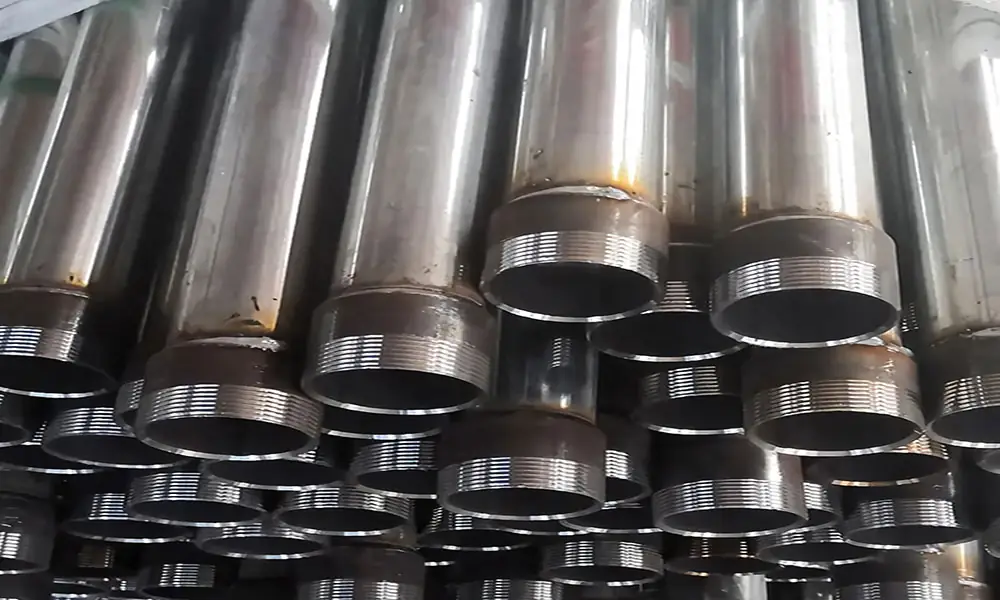
Why Choose Cangtie as Your Sonic Logging Pipe Supplier?
Choosing a sonic logging pipe supplier requires more than comparing prices. The pipe should meet the project specification. It should also perform reliably during installation and CSL testing.
Verified Q235 Material
Cangtie uses Q235 steel for its sonic logging pipes. According to its test data, the yield strength is 235–275 MPa, while the tensile strength is 315–500 MPa. The pipe also passes a 180° cold bending test without cracking.
Accurate Pipe Dimensions
CSL probes need a clear path through the tube. Cangtie supplies common sizes such as Φ50, Φ54, and Φ57 mm. Wall thickness ranges from 1.2 to 3.0 mm. According to Cangtie’s product data, straightness is controlled to ≤0.7 mm per meter.
Reliable Watertightness
Water is required inside the tube during CSL testing. For this reason, joint sealing is important. Finished sonic logging pipe connection assemblies undergo a 0.8 MPa water pressure sealing test for 30 seconds without leakage.
Flexible Project Specifications
Different piles may require different pipe sizes or connection methods. Cangtie can supply steel pipe dimensions based on project requirements. Buyers can specify the diameter, wall thickness, length, or connection type before production.
Cangtie also provides OEM sonic logging pipe service for project-specific requirements. This makes it easier to match the foundation pile testing pipe with the planned CSL test.
Sonic Logging Pipe Application Case: Foundation Pile Testing
Project Background
In March 2019, Cangtie supplied Q235 sonic logging pipes for a bridge pile project by China Railway 19th Bureau.
The project was built in soft soil near a river. The tubes used previously were easily deformed during concrete placement. As a result, some CSL tests failed or produced unstable signals. This slowed the pile testing process.
Sonic Logging Pipe Solution
Cangtie supplied thick-wall Q235 foundation pile testing pipes with crimped connections. The pipes were manufactured according to GB/T 3091-2015 requirements.
The pipes passed a 180° cold bending test without cracking. The joints also passed a 0.8 MPa water pressure test. During concrete placement, the tubes remained open. No tube collapse or slurry leakage was reported.
Project Results
The ultrasonic probes moved through the tubes smoothly. All foundation piles completed the integrity tests successfully. The project was then able to catch up with its construction schedule.
After this project, Cangtie continued to supply building materials to China Railway 19th Bureau.
FAQ
Q1. What material is used for sonic logging pipes?
Cangtie uses Q235B carbon structural steel for its sonic logging pipes. The pipes are manufactured according to GB/T 3091-2015 requirements. Material inspection reports are available when required.
Q2. What are the common sizes of Q235 sonic logging pipes?
Common sizes include Φ50 mm, Φ54 mm, and Φ57 mm. Wall thickness ranges from 1.2 mm to 3.0 mm. According to Cangtie’s product data, straightness is controlled to ≤0.7 mm/m.
Q3. How are sonic logging pipes connected during installation?
Crimped pipes are joined by inserting the pipe ends and using a hydraulic crimping tool. No on-site welding is required. This allows the pipes to be installed quickly.
Q4. What water pressure test is used for sonic logging pipes?
According to Cangtie’s product data, standard pipes undergo a 0.8 MPa water pressure test for 30 seconds without leakage. Thicker versions can be supplied when higher pressure resistance is required.
Q5. Can sonic logging pipes be used in cold weather?
According to Cangtie’s product data, Q235B sonic logging pipes have a stated working temperature range of -10°C to 120°C. They can therefore be considered for foundation projects in cold regions.
Conclusion
Choosing the right sonic logging pipe starts with the CSL testing plan. The pipe size should match the probe and pile design. It should also remain straight during installation. Reliable joints are needed to keep the tube watertight after concrete placement.
Q235 steel is a practical choice when strength and stable performance are required. Cangtie supplies Q235 foundation pile testing pipes in different sizes and connection types.
Before ordering, confirm the probe size, testing depth, pipe dimensions, and connection method. Contact Cangtie to discuss your project requirements and select a suitable sonic logging pipe.