
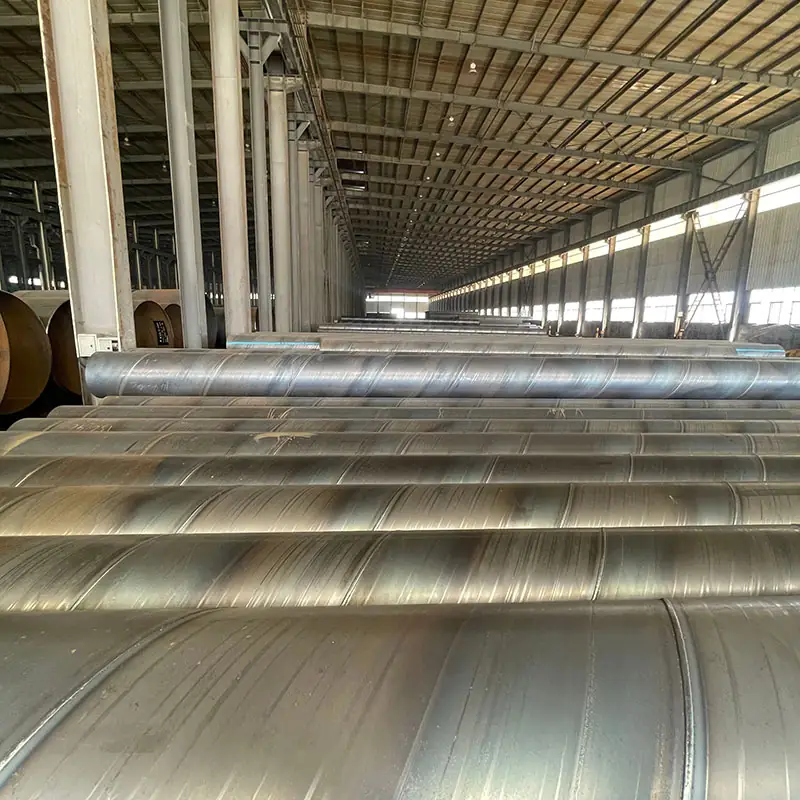
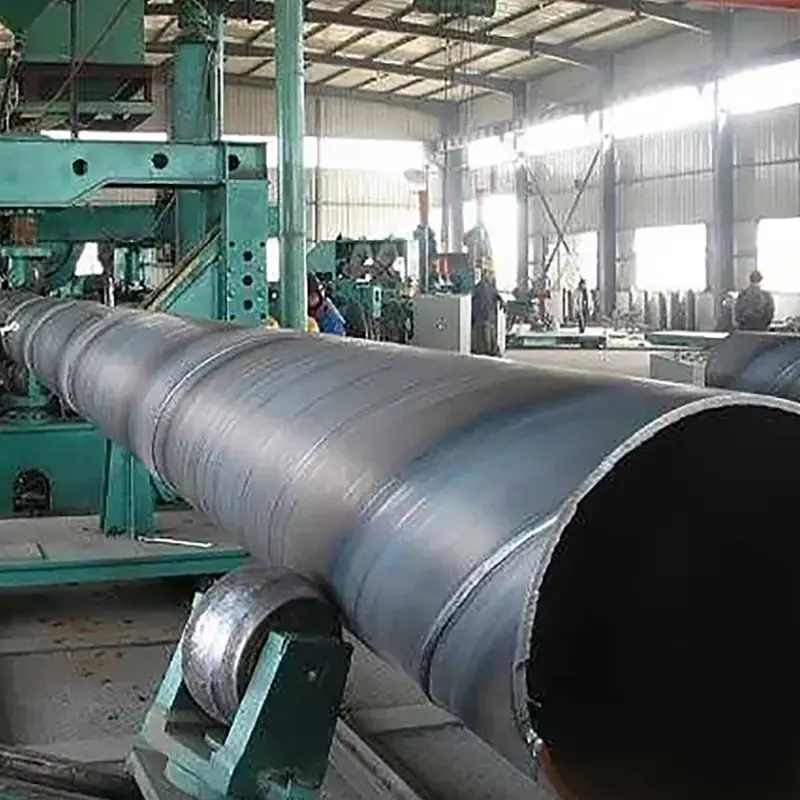
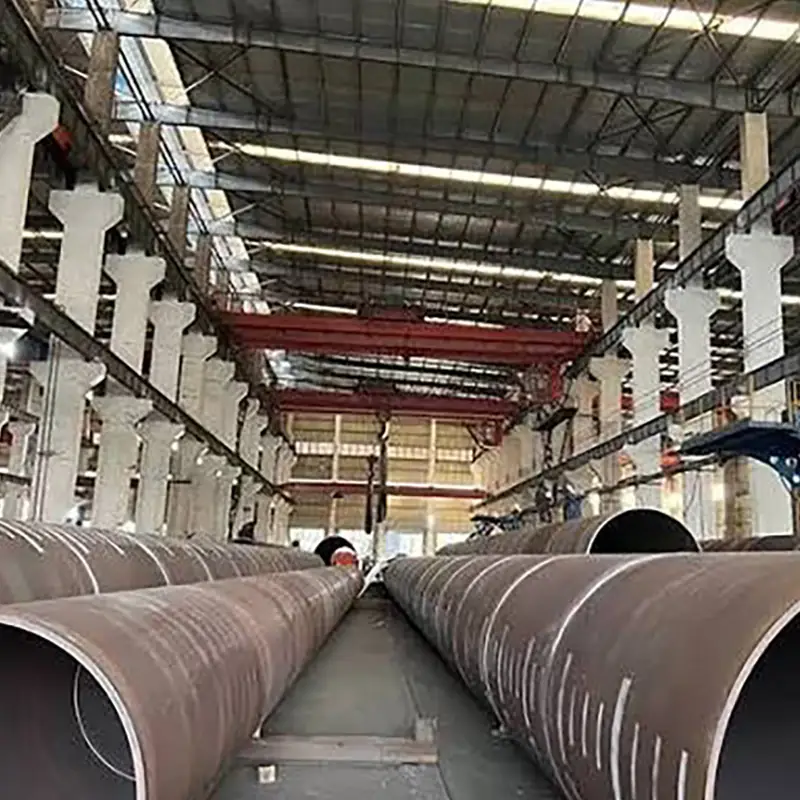
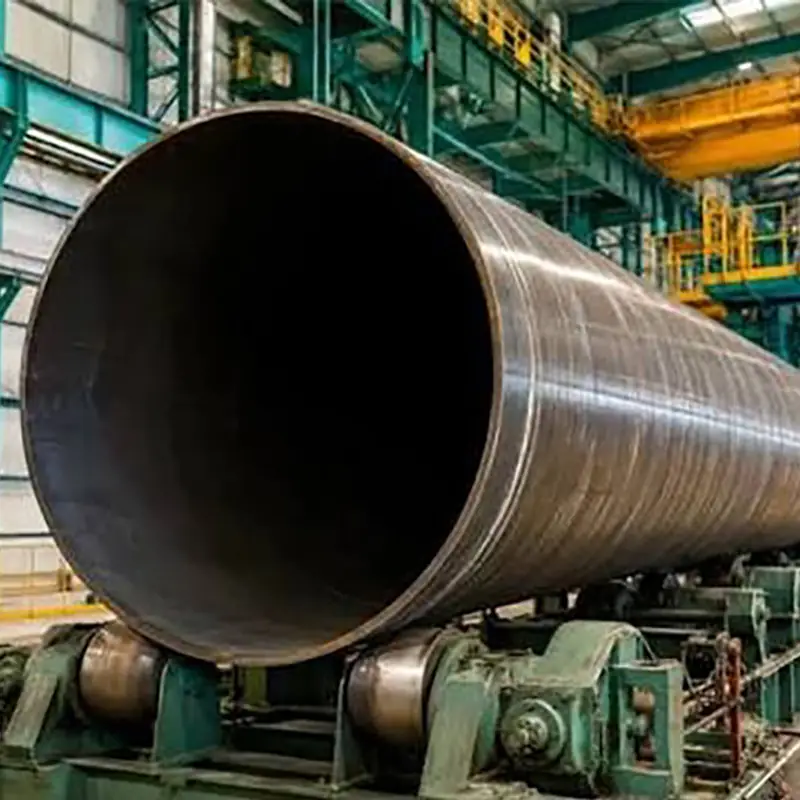
Features & Advantages
Technical Specifications
| Specification Item | Detailed Description |
| Product Name | EN 10219 S355J2H LSAW Steel Pipe Pile |
| Standard Specification | EN 10219-1 & EN 10219-2 (Cold formed welded structural hollow sections) |
| Steel Grade | S355J2H (S: Structural; 355: Yield Strength ≤16mm; J2: -20°C Impact Test; H: Hollow Section) |
| Yield & Tensile Strength | Yield Strength ≥ 345 MPa (for WT 16mm–40mm); Tensile Strength 470–630 MPa |
| Manufacturing Process | LSAW (Longitudinal Submerged Arc Welded - DSAW) |
| Nominal Outer Diameter | 36.00 inches (914.4 mm) |
| Wall Thickness (WT) | 25.4 mm (1.00 inch / heavy wall) |
| Impact Energy Verification | Charpy V-Notch minimum 27 Joules at -20°C (mandatory J2 testing) |
| Pipe Ends Preparation | Precision beveled ends (30°~35°) with 100% magnetic particle testing (MPT) to prevent lamination |
| Standard Pipe Length | Standard 12.0m to 24.0m, or customized as per maritime barge logistics |
Product Applications
Rigorous Quality Control & Manufacturing Process
Frequently Asked Questions (FAQ)
A: S355J2H is the premier European structural steel designation. “S” stands for structural steel; “355” indicates a minimum yield strength of 355 MPa (for thicknesses ≤16mm, which is 345 MPa for this 25.4mm heavy-wall profile); “J2” signifies that the steel has undergone mandatory Charpy V-notch impact testing at -20°C with a minimum absorbed energy of 27 Joules; and “H” indicates a structural hollow section.
A: Offshore wind jackets are subjected to massive cyclic fatigue. LSAW (Longitudinal Welded) pipes have only a single straight seam and undergo mechanical cold expansion, resulting in negligible residual stress, highly uniform wall thickness, and exceptional geometric roundness. This uniform profile prevents localized stress concentration, providing vastly superior fatigue limits compared to spiral-welded (SSAW) pipes.
A: Offshore wind turbines generate enormous dynamic bending moments at the seabed level due to wave movements and high wind gusts against the rotoring blades. A heavy wall thickness of 25.4mm (1 inch) provides the exceptional section modulus and buckling resistance required to absorb these bending moments, preventing the pin piles from buckling or fatiguing over their 25-to-30-year operational life.
A: Subsea carbon steel piles are protected using a dual system. In the atmospheric and splash zones, the steel is blast-cleaned to SA 2.5 and coated with heavy-duty Glass-Flake Epoxy or marine polyurethanes. For the submerged and buried zones, the piles are connected to active Cathodic Protection (CP) systems, utilizing sacrificial aluminum anodes welded directly to the steel pipe body to prevent galvanic corrosion.
Related Steel Solutions
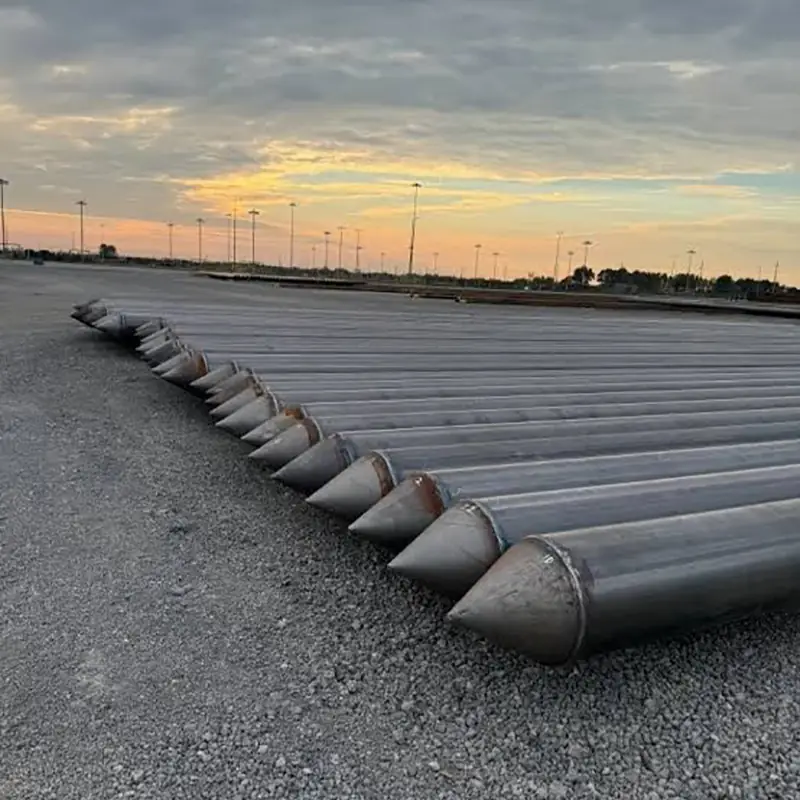
Bitumen Coated Piling Steel Pipe 813mm OD 12.7mm WT for Corrosive Soil Protection
Engineered to provide an exceptionally robust and cost-effective foundation barrier in the most aggressive subterranean…
EN 10219 S355J2H LSAW Steel Pipe Pile 36 Inch 25.4mm WT for Offshore Wind Farm
Engineered to withstand the relentless cyclic wave actions and immense structural loads of offshore renewable…
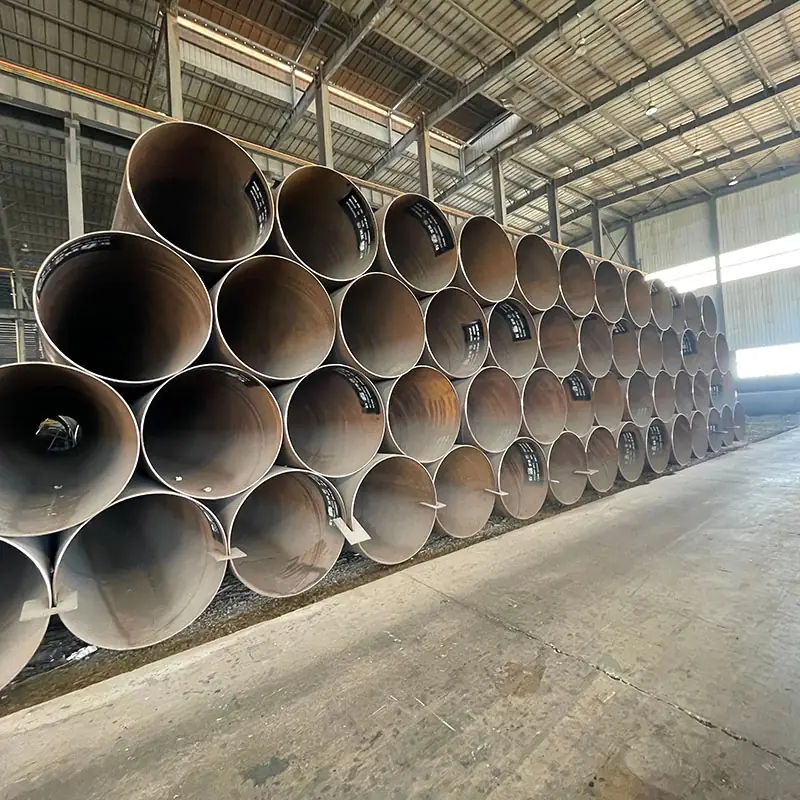
ASTM A500 Grade B Welded Piling Pipe 406mm OD with Conical Point for Soil Piling
Engineered to provide excellent ground consolidation and dependable end-bearing capacity, this ASTM A500 Grade B…
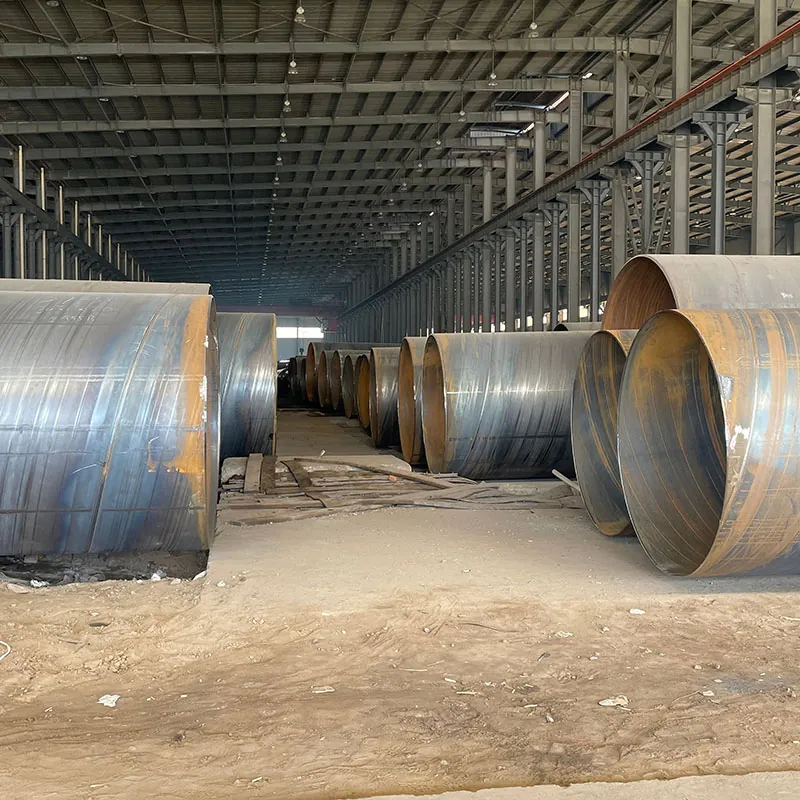
Heavy Wall Thickness SSAW Piling Pipe 1220mm OD for Marine Port Construction
Engineered to withstand the extreme dynamic loads and aggressive corrosive environments of maritime infrastructure, this…