
Features & Advantages
Technical Specifications
| Specification Item | Detailed Description |
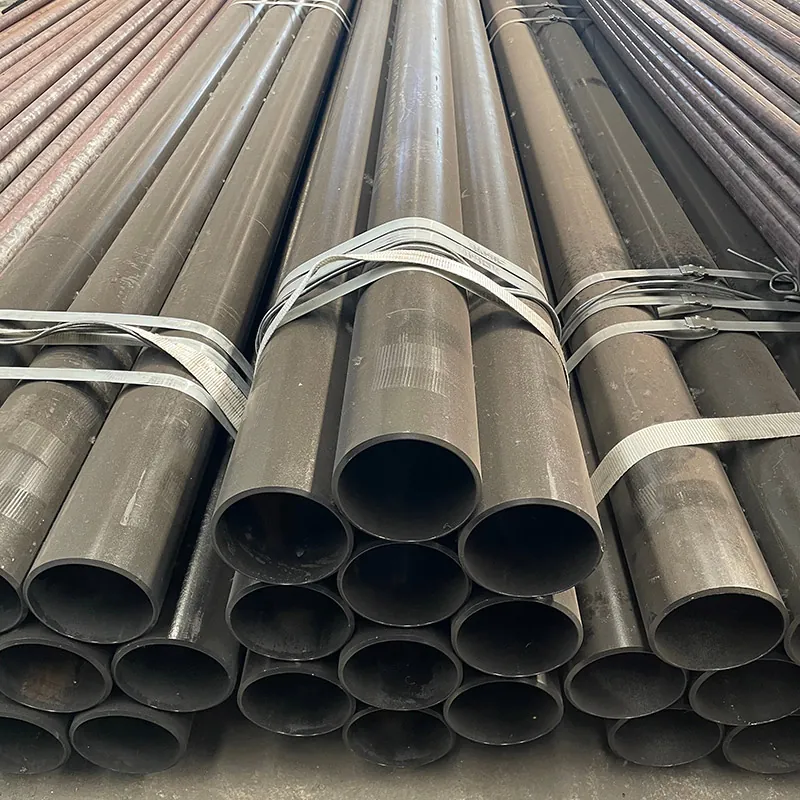
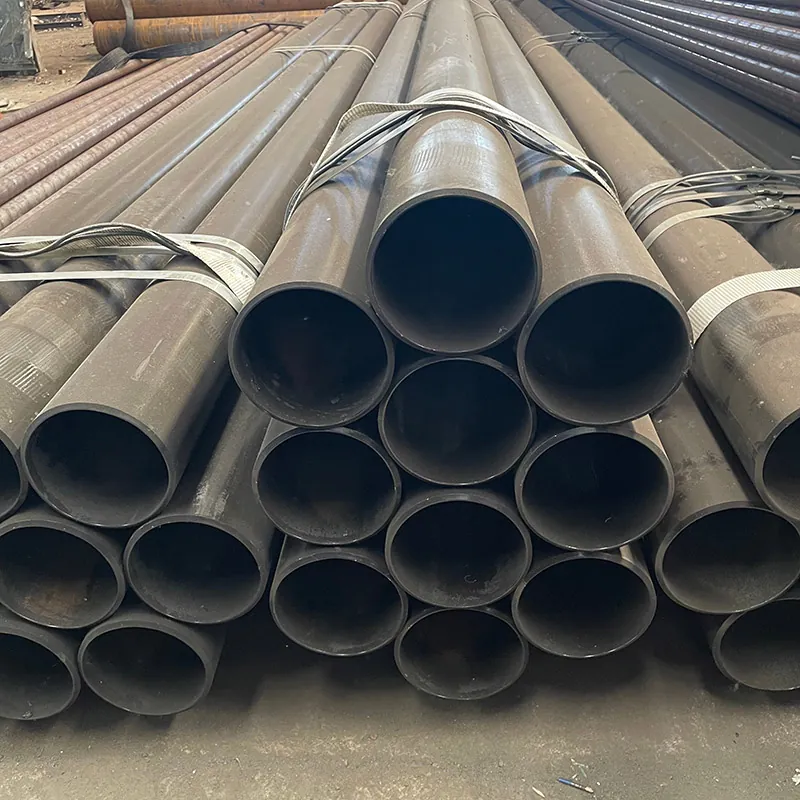
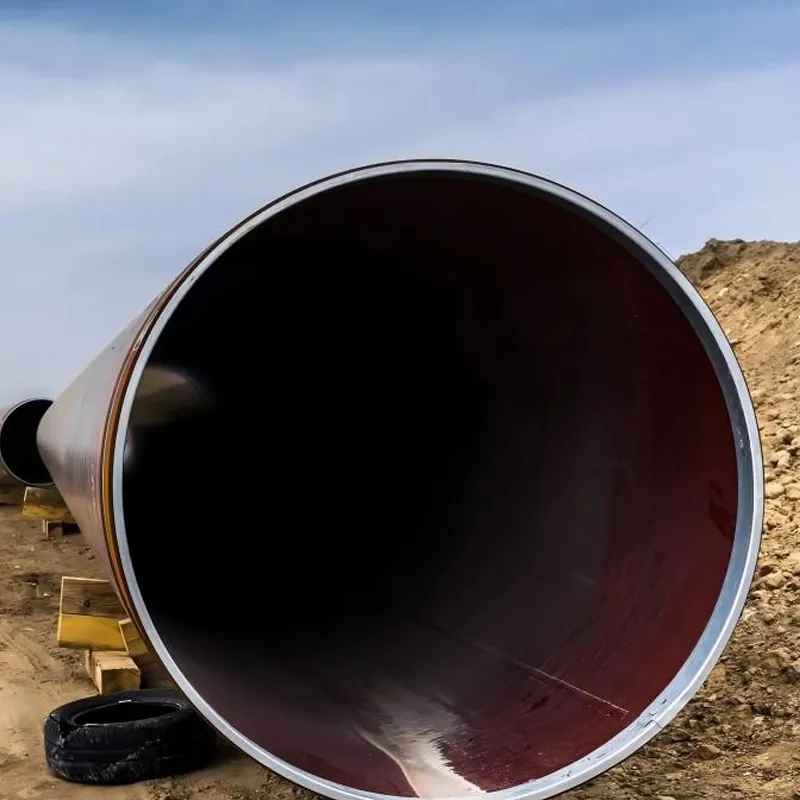
| Product Name | API 5L X70 PSL2 DSAW Steel Line Pipe |
| Standard Specification | API SPEC 5L (Specification for Line Pipe) / ISO 3183 equivalent |
| Steel Grade | Grade X70 / L485 (Yield Strength ≥ 485 MPa / 70,300 psi; Tensile Strength ≥ 570 MPa) |
| Quality Specification Level | PSL2 (Mandatory low-temperature Charpy and DWTT crack-arrest testing) |
| Manufacturing Process | DSAW (Double Submerged Arc Welded - JCOE or UOE cold expansion process) |
| Nominal Pipe Size (NPS) | 48 Inch (DN1200) |
| Outer Diameter (OD) | 48.00 inches (1219.2 mm) |
| Wall Thickness (WT) | Typical 0.500" to 1.500" (12.7 mm – 38.1 mm) depending on subsea design depth |
| Pipe Ends | Precision beveled ends with tight tolerance cutbacks for offshore welding ships |
| Service Classification | High-Pressure Subsea Service, Sour Service (NACE MR0175 compliant) |
| Standard Length | Double Random Length (DRL - approx. 12m / 40ft) or customized |
Product Applications
Rigorous Quality Control & Manufacturing Process
Frequently Asked Questions (FAQ)
A: “DSAW” (Double Submerged Arc Welded) refers to the process where the pipe’s longitudinal seam is welded from both the inside and outside using submerged arc welding. This double-weld pass ensures 100% deep weld penetration, flawless fusion, and extreme structural strength. For 48-inch pipelines, DSAW ensures the precise roundness and high ring stiffness required to withstand both high internal pressure and massive external subsea crushing forces.
A: X70 is a high-strength micro-alloyed carbon steel. Under deepwater conditions, a pipe must have immense wall strength to prevent collapse under hydrostatic pressure. Using X70 steel (minimum 485 MPa yield) allows pipeline engineers to keep the pipe’s wall thickness manageable, reducing the overall weight of the pipeline, which makes offshore pipe-laying by vessel crane systems feasible and much more economical.
A: Beyond standard PSL1 tests, PSL2 mandates Charpy V-notch impact tests at sub-zero temperatures to ensure the steel remains ductile. Crucially for gas pipelines, it requires Drop Weight Tear Testing (DWTT). Gas is highly compressible, and if a pipe ruptures, the gas can drive a crack along the pipe at speeds exceeding the speed of sound. DWTT ensures the X70 steel has the necessary fracture toughness to naturally arrest a running crack.
A: Offshore steel pipelines require robust multi-layer external coatings. We can supply these pipes with high-performance external 3PE (Three-Layer Polyethylene) or FBE (Fusion Bonded Epoxy) coatings, and we can also apply concrete weight coatings (CWC) over the anti-corrosion layer to provide negative buoyancy and physical protection on the ocean floor.
Related Steel Solutions
Bitumen Coated Piling Steel Pipe 813mm OD 12.7mm WT for Corrosive Soil Protection
Engineered to provide an exceptionally robust and cost-effective foundation barrier in the most aggressive subterranean…
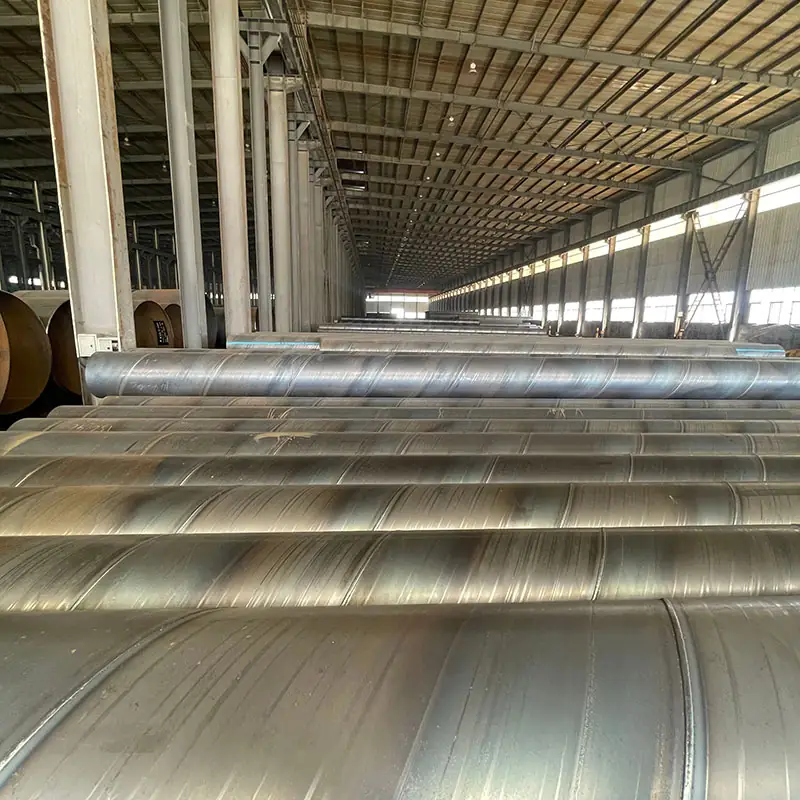
EN 10219 S355J2H LSAW Steel Pipe Pile 36 Inch 25.4mm WT for Offshore Wind Farm
Engineered to withstand the relentless cyclic wave actions and immense structural loads of offshore renewable…
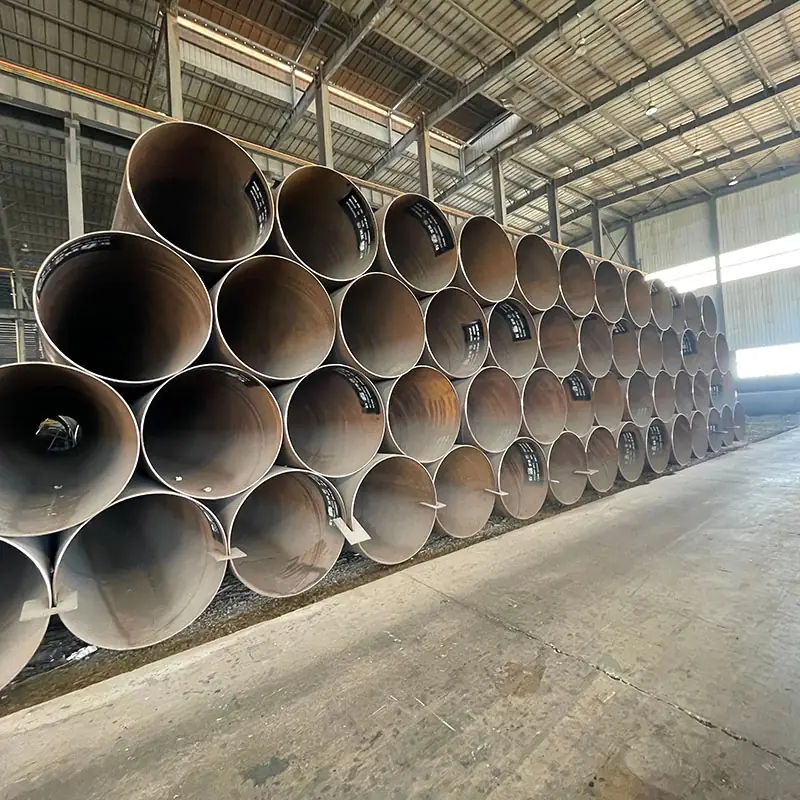
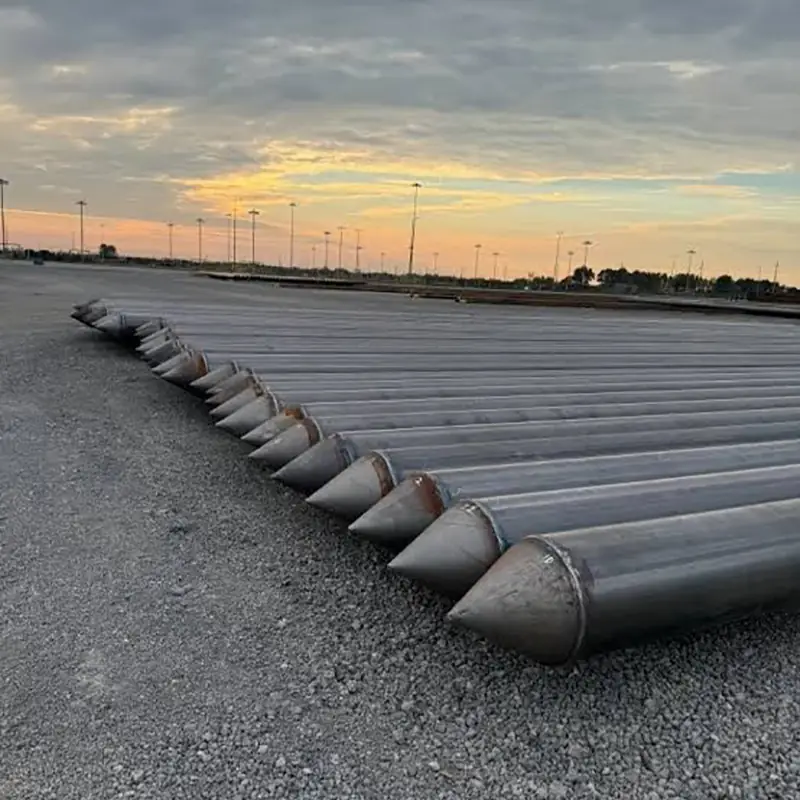
ASTM A500 Grade B Welded Piling Pipe 406mm OD with Conical Point for Soil Piling
Engineered to provide excellent ground consolidation and dependable end-bearing capacity, this ASTM A500 Grade B…
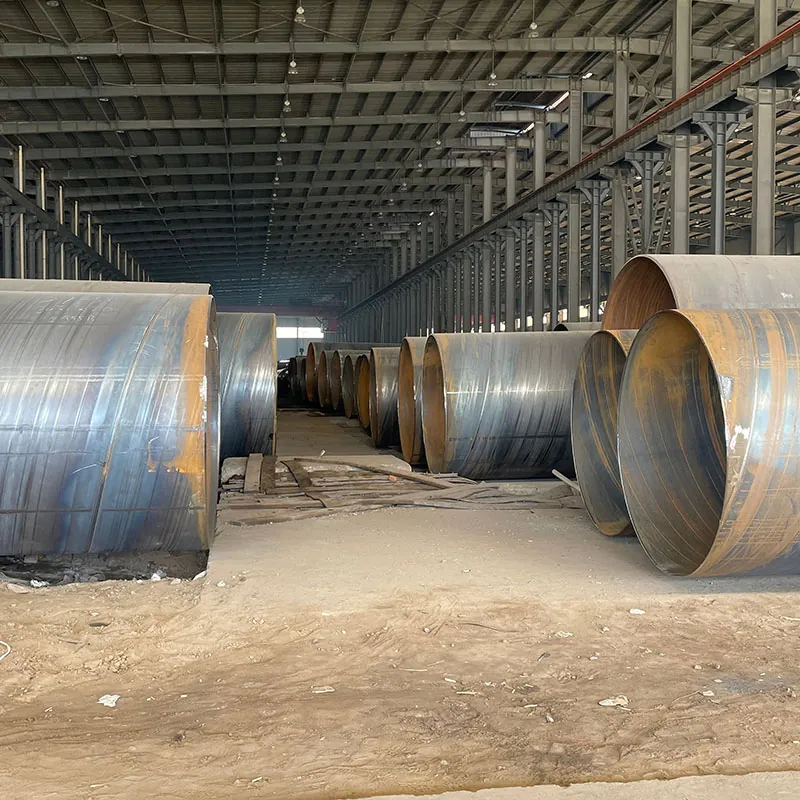
Heavy Wall Thickness SSAW Piling Pipe 1220mm OD for Marine Port Construction
Engineered to withstand the extreme dynamic loads and aggressive corrosive environments of maritime infrastructure, this…