
Features & Advantages
Technical Specifications
| Specification Item | Detailed Description |
| Product Name | HDPE Lined Carbon Steel Pipe |
| Lining Standard | ASTM F1545 (Standard Specification for Plastic-Lined Ferrous Metal Pipe) |
| Base Steel Pipe | ASTM A53 Grade B, API 5L, ASTM A106 (Seamless or ERW) |
| Manufacturing Process | Outer steel host pipe + Swagelining / Tight-fit HDPE liner insertion |
| Nominal Pipe Size (NPS) | 8 Inch (DN200) |
| Outer Diameter (OD) | 8.625 inches (219.1 mm) |
| Steel Wall Thickness (WT) | Schedule 40 (8.18 mm) or Schedule 80 (12.7 mm) based on pressure rating |
| HDPE Liner Thickness | Standard 6.0 mm to 10.0 mm (SDR 11, SDR 17, or custom wear-resistant specifications) |
| Lining Material | High-Density Polyethylene PE100 or PE4710 (Virgin resin) |
| End Connections | Flanged Ends with HDPE liner flared over the steel flange face (stub-end configuration) |
| Standard Length | 5.8m, 6.0m, or customized as per site design requirements |
Product Applications
Rigorous Quality Control & Manufacturing Process
Frequently Asked Questions (FAQ)
A: We utilize “Swagelining” or cold-reduction technology. The HDPE liner is temporarily compressed and pulled into the steel host pipe. Once inside, the liner naturally expands back, exerting constant radial pressure against the inner steel wall. This creates a permanent, high-friction interference fit that prevents the liner from slipping, twisting, or collapsing under vacuum or temperature fluctuations.
A: Rubber and polyurethane linings are excellent but can be expensive and difficult to repair or install in long, continuous runs. HDPE lining combines high chemical resistance, excellent wear limits, and a very low friction coefficient. Its seamless, joint-free installation inside the steel pipe offers a highly cost-effective and rugged barrier that is immune to localized peeling or bubbling.
A: Standard jointing relies on flanged connections. During fabrication, the HDPE liner is flared (folded back) directly over the carbon steel flange face. When two pipes are bolted together on-site, the plastic faces press tightly against each other, creating a completely sealed, continuous thermoplastic barrier that prevents the slurry from ever contacting the steel flange.
A: Since the HDPE liner is held in an interference fit against the inner steel wall, any internal fluid pressure is directly transferred to the steel host pipe. Therefore, the pressure rating is determined entirely by the outer steel pipe’s class (e.g., ANSI Class 150, 300, or 600), allowing the pipe to safely operate under pressures that would easily rupture a solid plastic pipe.
Related Steel Solutions
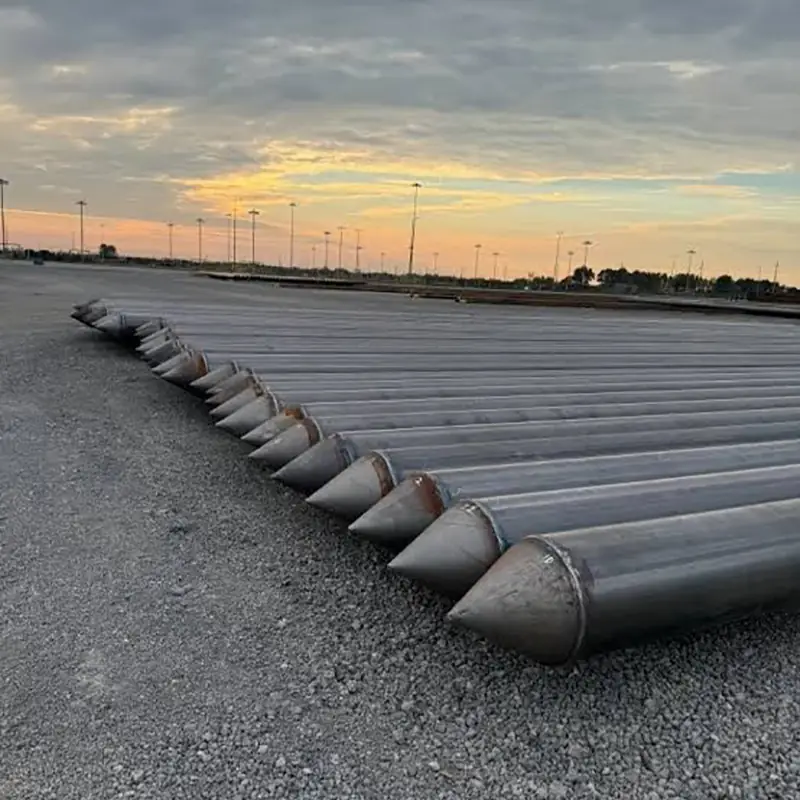
Bitumen Coated Piling Steel Pipe 813mm OD 12.7mm WT for Corrosive Soil Protection
Engineered to provide an exceptionally robust and cost-effective foundation barrier in the most aggressive subterranean…
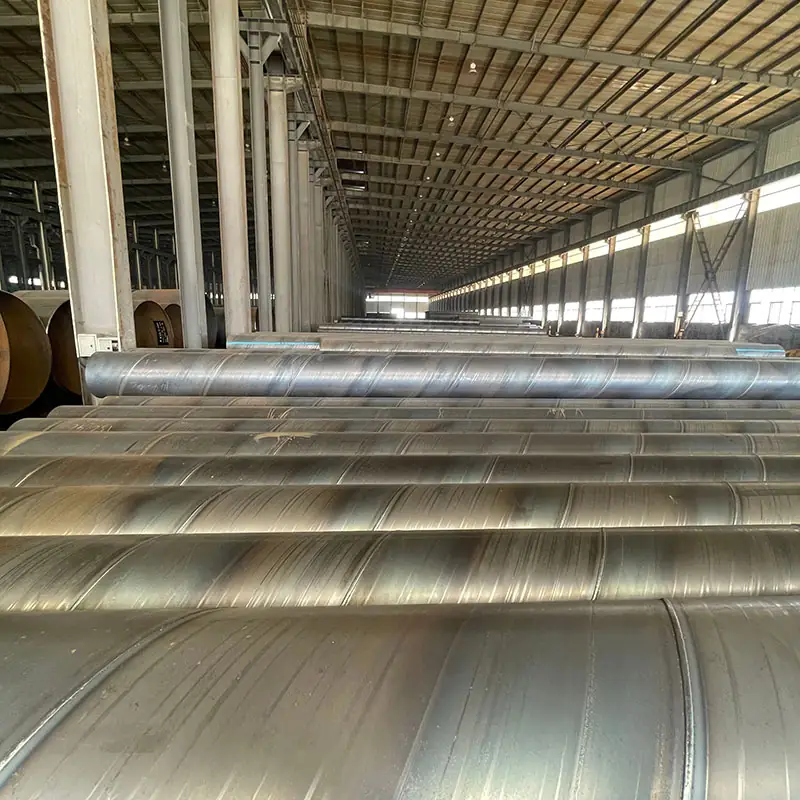
EN 10219 S355J2H LSAW Steel Pipe Pile 36 Inch 25.4mm WT for Offshore Wind Farm
Engineered to withstand the relentless cyclic wave actions and immense structural loads of offshore renewable…
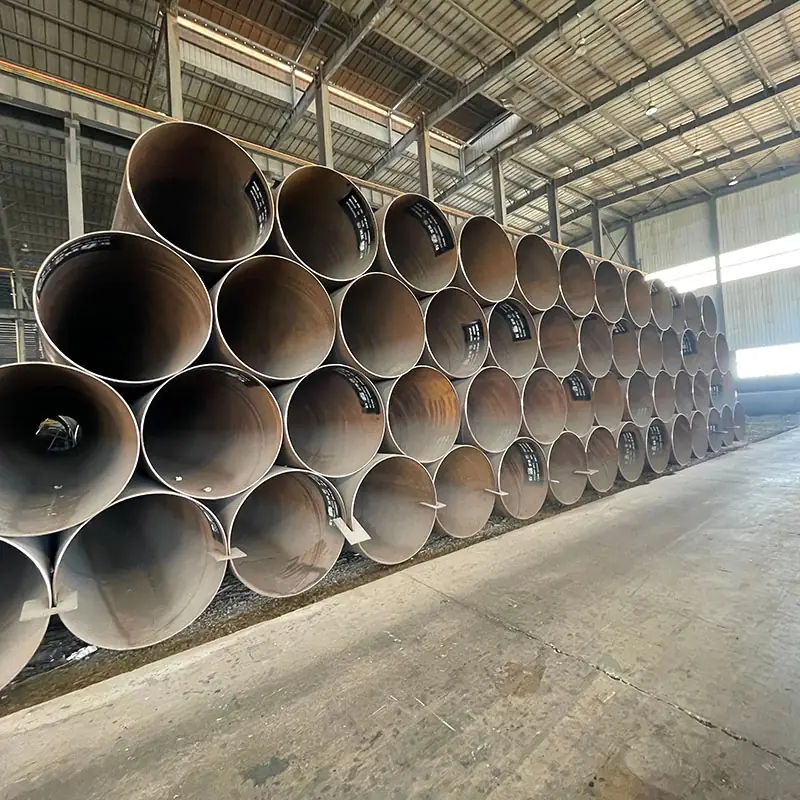
ASTM A500 Grade B Welded Piling Pipe 406mm OD with Conical Point for Soil Piling
Engineered to provide excellent ground consolidation and dependable end-bearing capacity, this ASTM A500 Grade B…
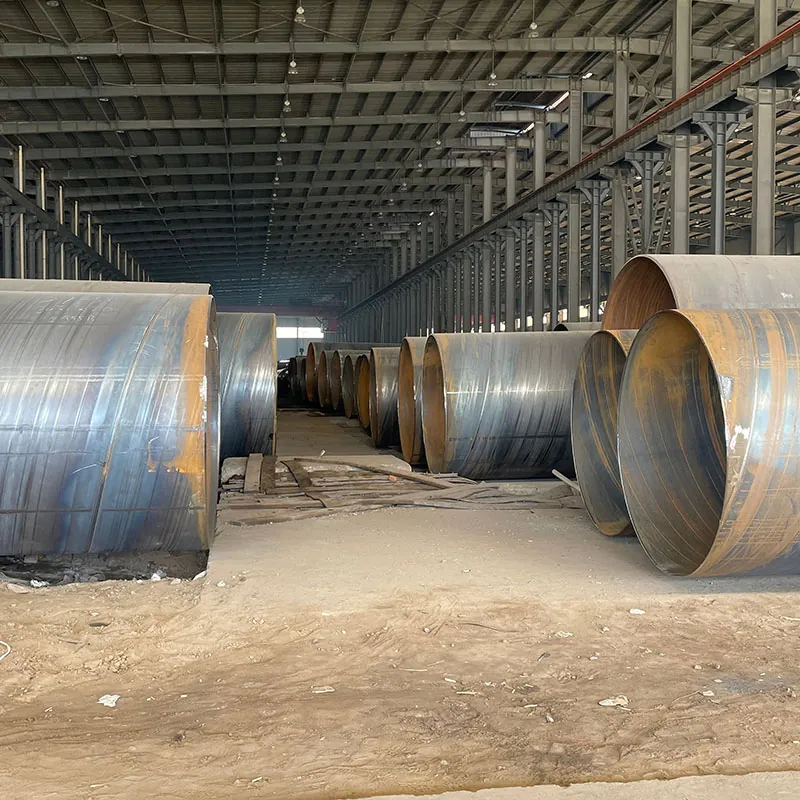
Heavy Wall Thickness SSAW Piling Pipe 1220mm OD for Marine Port Construction
Engineered to withstand the extreme dynamic loads and aggressive corrosive environments of maritime infrastructure, this…