
Features & Advantages
Technical Specifications
| Specification Item | Detailed Description |
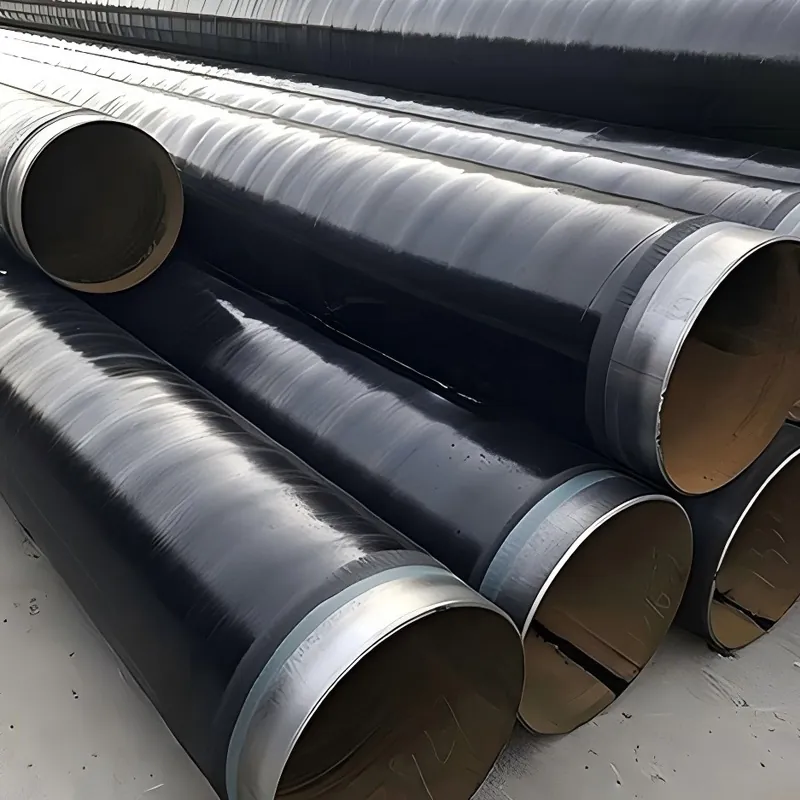
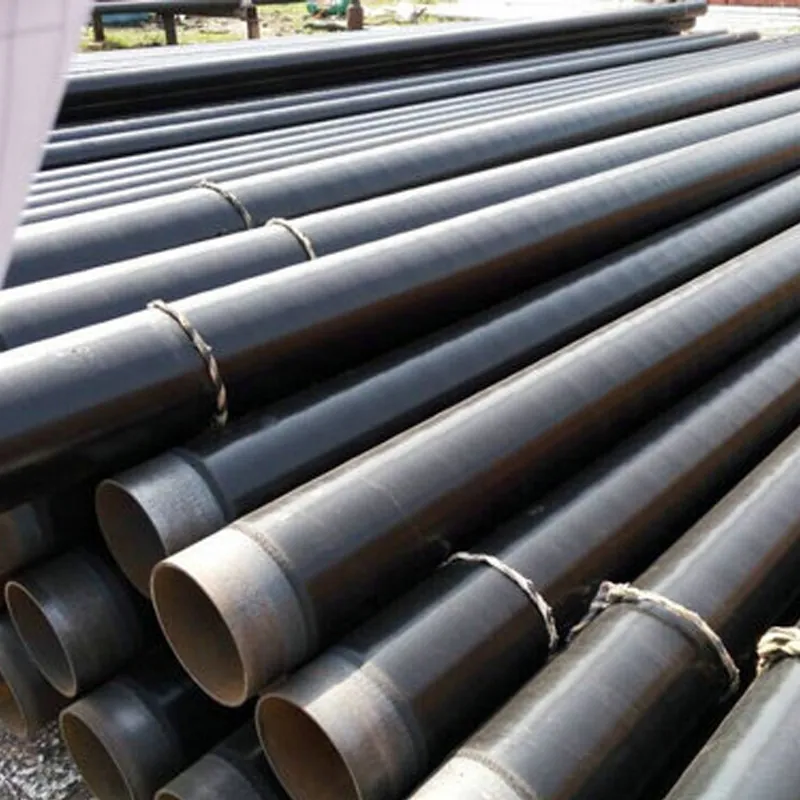
| Product Name | Internal & External Epoxy Coal Tar Coated Welded Steel Pipe |
| Base Pipe Material | Welded Carbon Steel Pipe (SSAW or ERW to ASTM A53, API 5L, or GB/T 3091) |
| Nominal Diameter (DN) | DN500 |
| Outer Diameter (OD) | 20.00 inches (508.0 mm) |
| Wall Thickness (WT) | Typical 6.0 mm to 12.7 mm (8.0 mm / 0.315 inches standard, or custom) |
| Anti-Corrosion Coating | Liquid Epoxy Coal Tar (Coal Tar Epoxy) Paint on both internal and external surfaces |
| Coating Standards | AWWA C210, SSPC-Paint 16, SY/T 0447 |
| Coating Thickness | Standard 300 to 500 microns Dry Film Thickness (DFT) per side, or custom multi-layer configs |
| Pipe Ends | Beveled ends (30°~35°) with internal and external bare steel cutbacks for field joint welding |
| Standard Length | 5.8m, 6.0m, 11.8m, 12.0m, or customized |
Product Applications
Rigorous Quality Control & Manufacturing Process
Frequently Asked Questions (FAQ)
A: Drainage water is rarely pure; it often carries acidic rainwater, chemical runoff, silt, and organic waste. The internal coating protects the steel from corrosion caused by stagnant water and mechanical abrasion from silt. The external coating protects against damp subterranean soil, microbial attack, and stray currents, ensuring 360-degree, dual-barrier protection.
A: Yes. Unlike plastic or concrete drainage pipes, DN500 (508mm OD) welded steel pipe possesses exceptional mechanical yield strength and high ring stiffness. It can withstand heavy traffic overburdens, high impact, and deep soil loads without cracking or losing structural shape.
A: During base pipe production, the internal weld beads of the ERW or spiral seam are trimmed or strictly monitored. During the coating process, specialized internal spray booms with rotating heads are used. This ensures the liquid coal tar epoxy completely and evenly encapsulates the internal weld seam without leaving thin spots or runs.
A: The pipes are delivered with precision-beveled ends and bare steel cutbacks on both the inner and outer ends (typically 50-100mm). After field butt-welding and weld inspection, the joint area is cleaned. The external joint is wrapped with cold-applied coal tar tape or liquid epoxy coal tar, and the internal weld joint is coated using specialized joint-coating tools or manual application to match the main pipe’s protective profile.
Related Steel Solutions
Bitumen Coated Piling Steel Pipe 813mm OD 12.7mm WT for Corrosive Soil Protection
Engineered to provide an exceptionally robust and cost-effective foundation barrier in the most aggressive subterranean…
EN 10219 S355J2H LSAW Steel Pipe Pile 36 Inch 25.4mm WT for Offshore Wind Farm
Engineered to withstand the relentless cyclic wave actions and immense structural loads of offshore renewable…
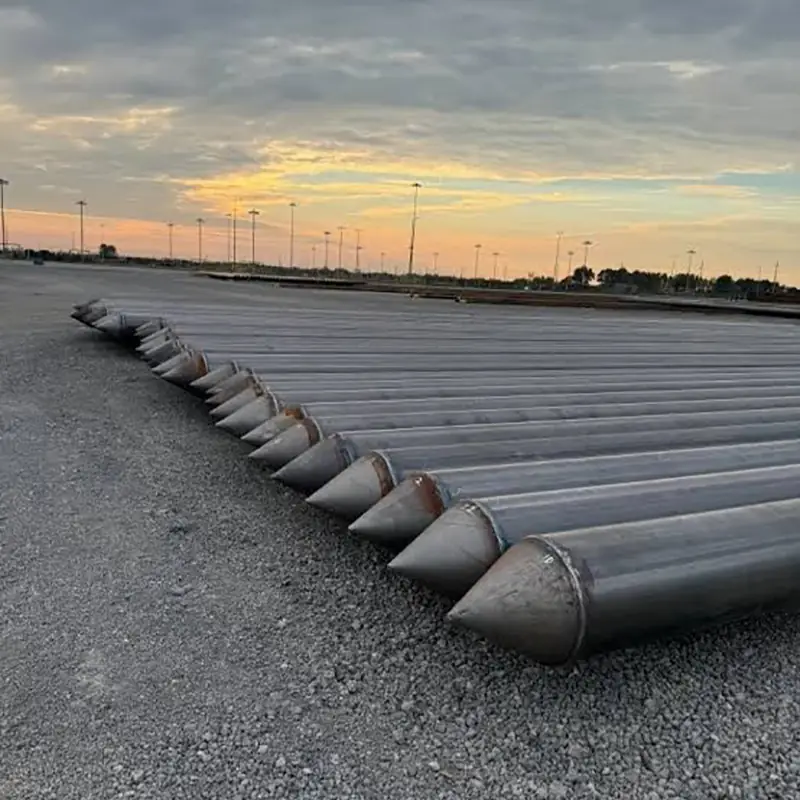
ASTM A500 Grade B Welded Piling Pipe 406mm OD with Conical Point for Soil Piling
Engineered to provide excellent ground consolidation and dependable end-bearing capacity, this ASTM A500 Grade B…
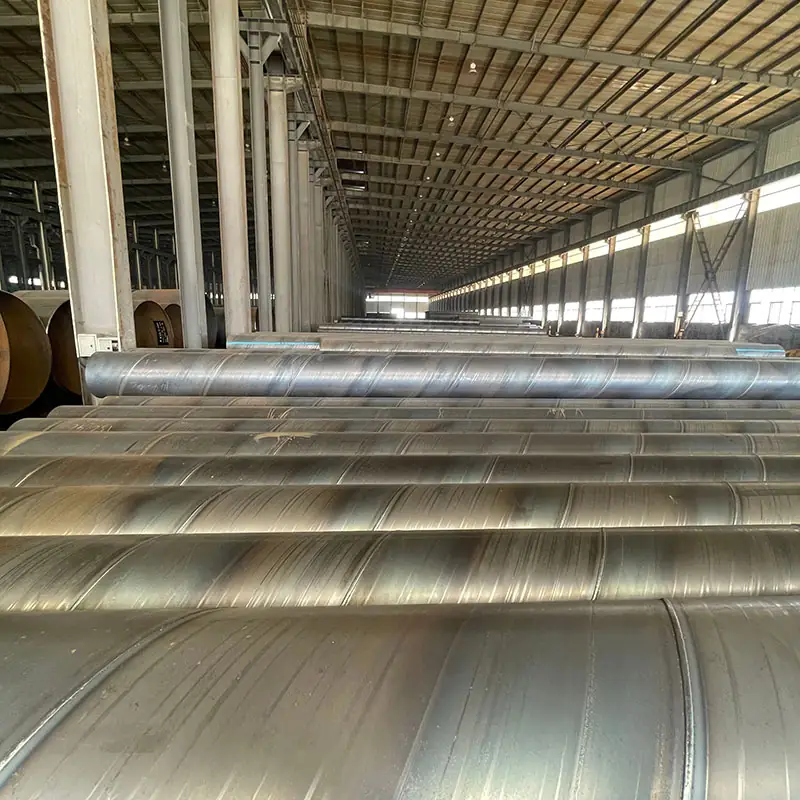
Heavy Wall Thickness SSAW Piling Pipe 1220mm OD for Marine Port Construction
Engineered to withstand the extreme dynamic loads and aggressive corrosive environments of maritime infrastructure, this…