
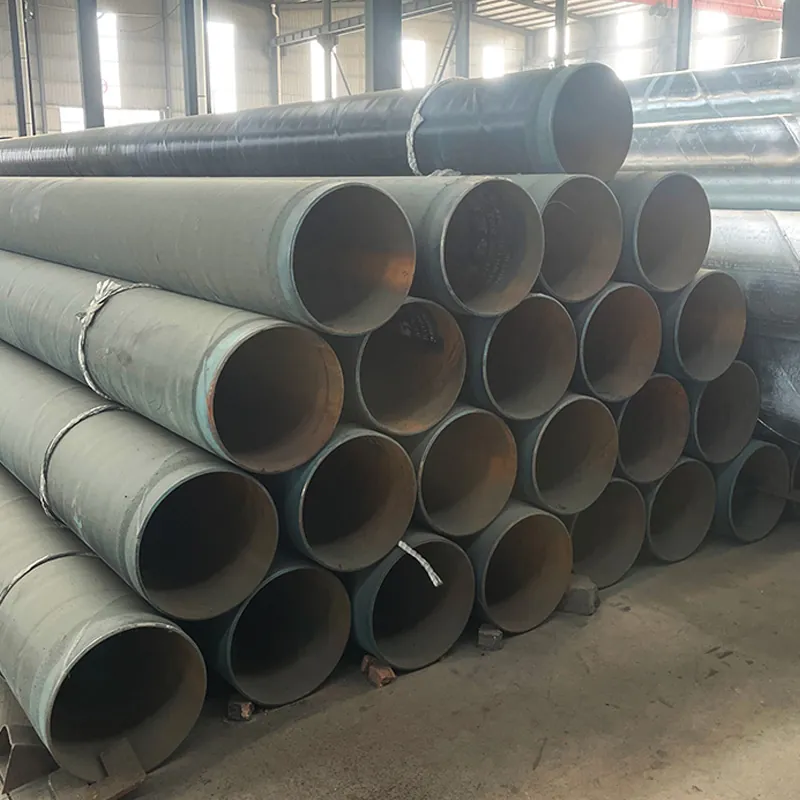
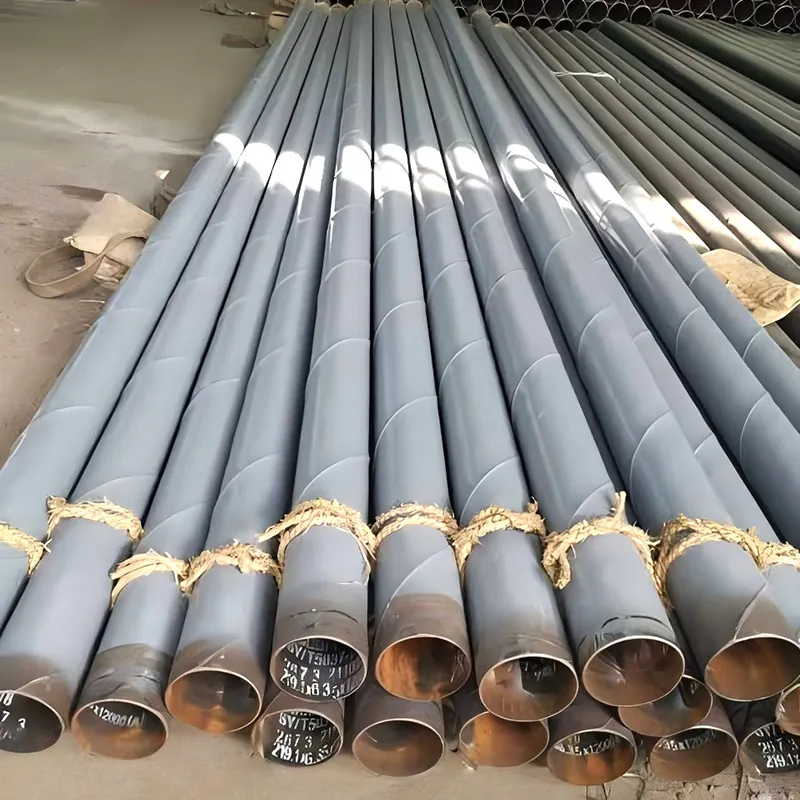
Features & Advantages
Technical Specifications
| Specification Item | Detailed Description |
| Product Name | Dual Coated Steel Pipe (External 3PE + Internal Epoxy) |
| Base Pipe Material | AWWA C200, API 5L Grade B, X42, X52 (SSAW or LSAW process) |
| Outer Diameter (OD) | 1016 mm (40 Inch) |
| Wall Thickness (WT) | 9.53 mm – 25.4 mm (Customized based on operational pressure) |
| External Coating | 3-Layer Polyethylene (FBE Primer + Adhesive + PE Topcoat) |
| Internal Lining | Food-Grade Liquid Epoxy or Internal FBE (Potable Water Safe) |
| Coating Standards |
Ext: DIN 30670, ISO 21809-1 Int: AWWA C210, NSF/ANSI 61 |
| Pipe Ends | Beveled ends with designated bare steel cutbacks on both inside and outside for welding |
| Standard Length | 12m, or customized up to 18m per project logistics |
Product Applications
Rigorous Quality Control & Manufacturing Process
Frequently Asked Questions (FAQ)
A: TPEP is a common industry abbreviation for this specific dual-coating configuration. It stands for Three-layer PE (Polyethylene) for the exterior, and Powder Epoxy (or liquid epoxy) for the interior lining. It represents the highest standard for buried water pipelines.
A: Our internal epoxy coatings strictly comply with international potable water standards, such as AWWA C210 and NSF/ANSI 61. These certifications guarantee that the cured epoxy will not leach harmful chemicals, heavy metals, or alter the taste and odor of the drinking water.
A: To allow for welding, the pipes are delivered with bare steel cutbacks on both the inside and outside. Because a 1016mm (40-inch) diameter is large enough for human entry, pipeline technicians (or specialized robotic crawlers) can safely enter the pipe after welding to manually clean the weld seam and apply the field joint epoxy coating, ensuring continuous internal protection.
A: Yes, significantly. Unlined steel pipes develop rust and scaling over time, which increases internal surface roughness and friction. The epoxy lining remains perfectly smooth throughout its lifespan, minimizing pressure loss due to friction (improving the Hazen-Williams C-factor). This directly translates to lower energy consumption for water pumps.
Related Steel Solutions
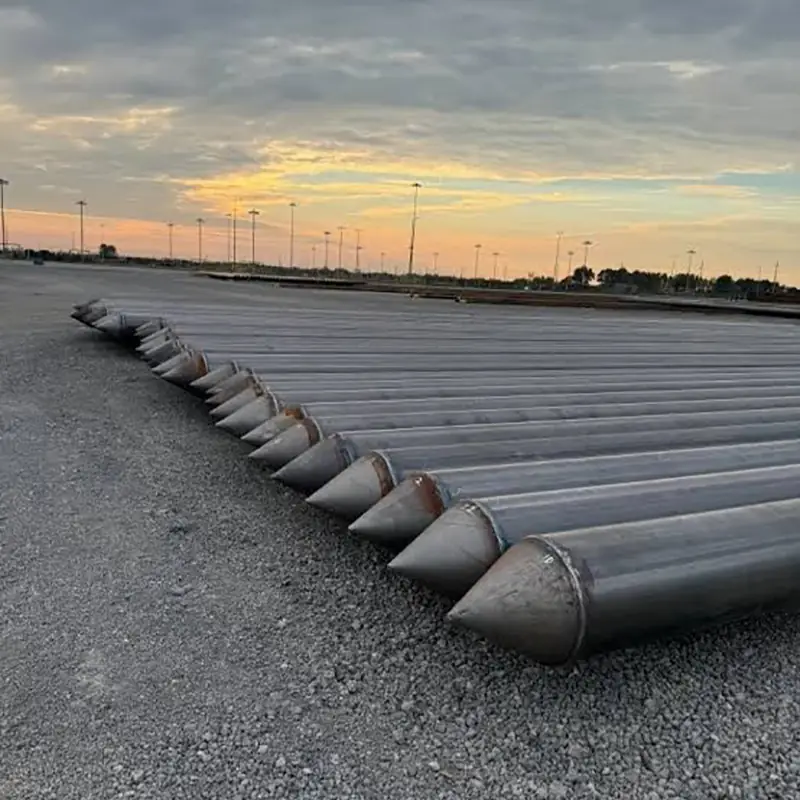
Bitumen Coated Piling Steel Pipe 813mm OD 12.7mm WT for Corrosive Soil Protection
Engineered to provide an exceptionally robust and cost-effective foundation barrier in the most aggressive subterranean…
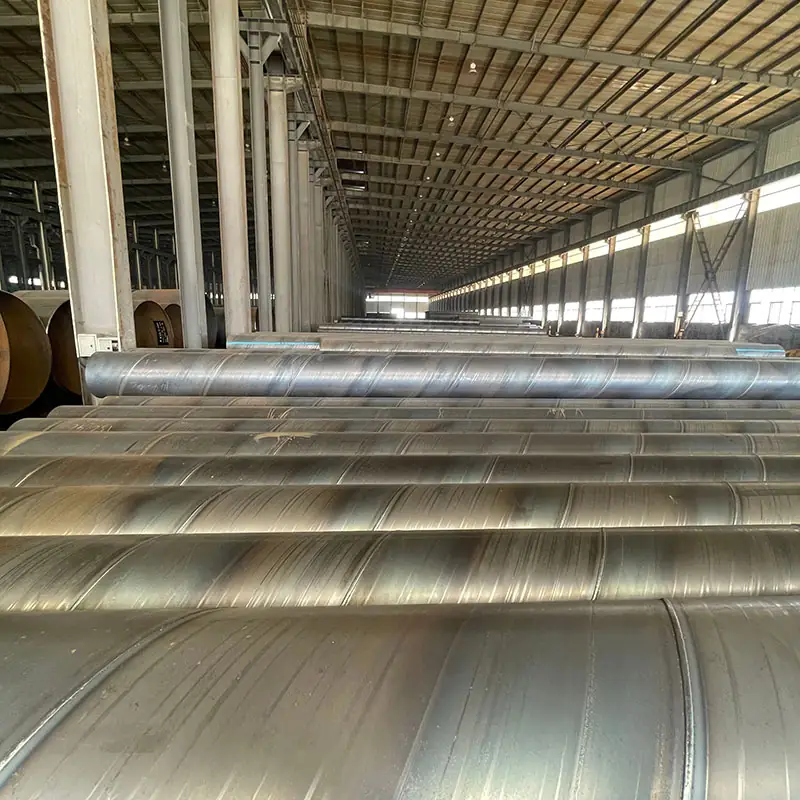
EN 10219 S355J2H LSAW Steel Pipe Pile 36 Inch 25.4mm WT for Offshore Wind Farm
Engineered to withstand the relentless cyclic wave actions and immense structural loads of offshore renewable…
ASTM A500 Grade B Welded Piling Pipe 406mm OD with Conical Point for Soil Piling
Engineered to provide excellent ground consolidation and dependable end-bearing capacity, this ASTM A500 Grade B…
Heavy Wall Thickness SSAW Piling Pipe 1220mm OD for Marine Port Construction
Engineered to withstand the extreme dynamic loads and aggressive corrosive environments of maritime infrastructure, this…