
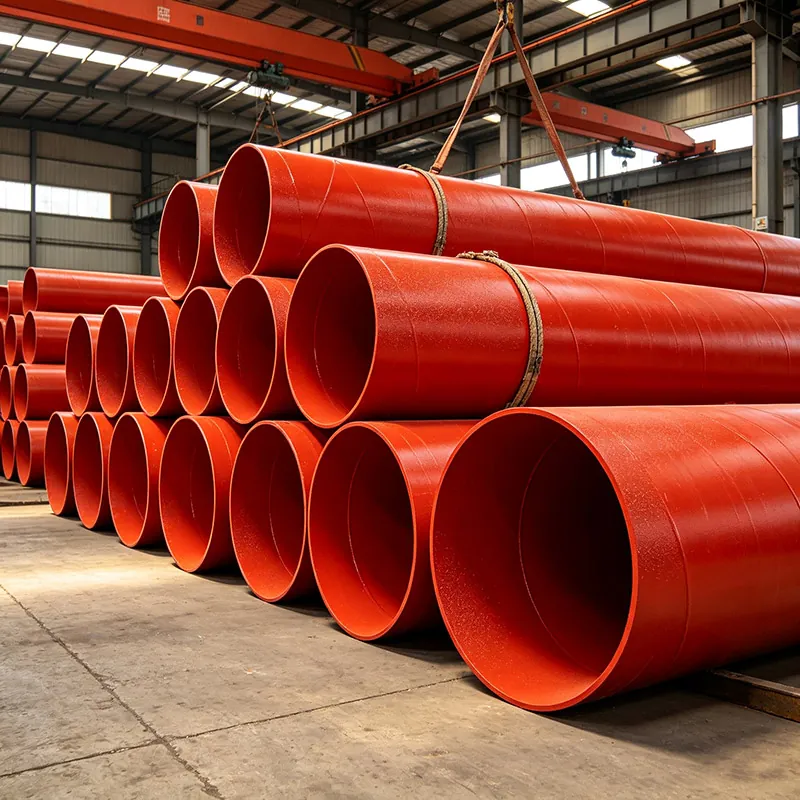
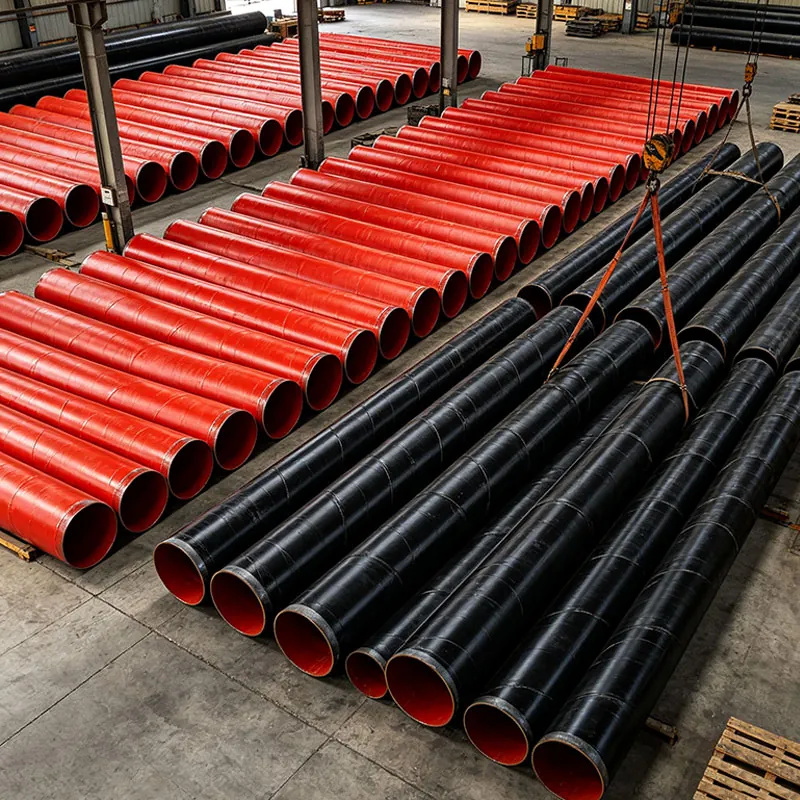
Features & Advantages
Technical Specifications
| Specification Item | Detailed Description |
| Product Name | FBE Internal Lining Steel Pipe |
| Lining Standard | ISO 15741, API RP 5L2, AWWA C213 (Friction-reduction coatings) |
| Base Pipe Standard | API 5L Grade X52, PSL1 / PSL2 (High Yield Strength Line Pipe) |
| Manufacturing Process | Seamless (SMLS) or ERW base pipe followed by Internal FBE spraying |
| Nominal Pipe Size (NPS) | 16 Inch (DN400) |
| Outer Diameter (OD) | 16.00 inches (406.4 mm) |
| Wall Thickness (WT) | Typical 9.53 mm (0.375 inches) or Schedule 40 (12.70 mm / 0.500 inches) |
| Internal Lining Type | Specialized friction-reduction Fusion Bonded Epoxy (FBE) |
| Lining Thickness | Standard 60 to 120 microns Dry Film Thickness (DFT) for optimal drag reduction |
| Pipe Ends | Beveled ends (30°~35°) with a factory bare steel cutback for field joint welding |
| Standard Length | 11.8m, 12.0m, or customized as per project logistics |
Product Applications
Rigorous Quality Control & Manufacturing Process
Frequently Asked Questions (FAQ)
A: Uncoated steel pipes have microscopic surface irregularities (roughness) that cause turbulence as gas flows under high velocity. This turbulence creates friction, causing pressure drop (head loss). Our internal FBE lining reduces the internal surface roughness to less than 5 microns. This smooth surface reduces turbulence, creating laminar flow, increasing gas throughput by up to 10 percent, and reducing pressure drop.
A: Unlike thick external anti-corrosion coatings (which are typically 300 to 500 microns), internal drag reduction coatings (complying with ISO 15741 or API RP 5L2) are applied much thinner, typically between 60 and 120 microns. This thickness is optimized to achieve the lowest possible surface roughness while maintaining a tough, uniform film over the steel.
A: API 5L Grade X52 is a high-yield carbon steel grade. It possesses a minimum yield strength of 360 MPa (52,200 psi) and excellent fracture toughness. For a 16-inch pipeline, this strength allows the pipe to safely contain high gas operating pressures while minimizing the required wall thickness, which optimizes structural steel weight and lowers project material costs.
A: The pipes are supplied with a standard factory bare steel cutback (usually 50mm–100mm) at the ends. This prevents the heat of field butt-welding from melting or burning the internal FBE lining. Because natural gas pipelines transmit non-corrosive gas, the localized bare steel weld seam area on the inside generally does not require field joint coating, though standard external joint protection is still applied.
Related Steel Solutions
Bitumen Coated Piling Steel Pipe 813mm OD 12.7mm WT for Corrosive Soil Protection
Engineered to provide an exceptionally robust and cost-effective foundation barrier in the most aggressive subterranean…
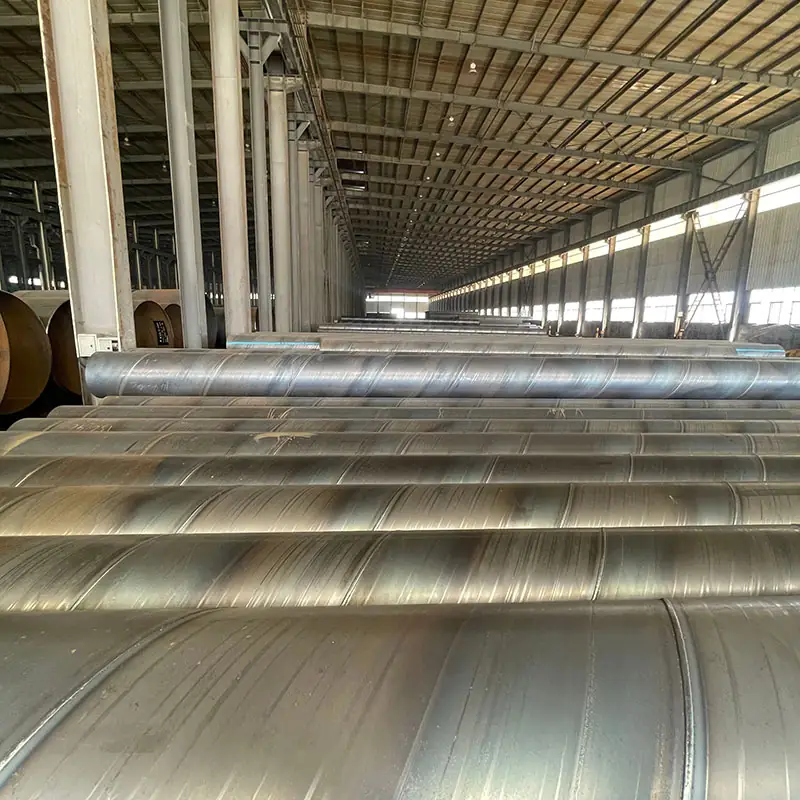
EN 10219 S355J2H LSAW Steel Pipe Pile 36 Inch 25.4mm WT for Offshore Wind Farm
Engineered to withstand the relentless cyclic wave actions and immense structural loads of offshore renewable…
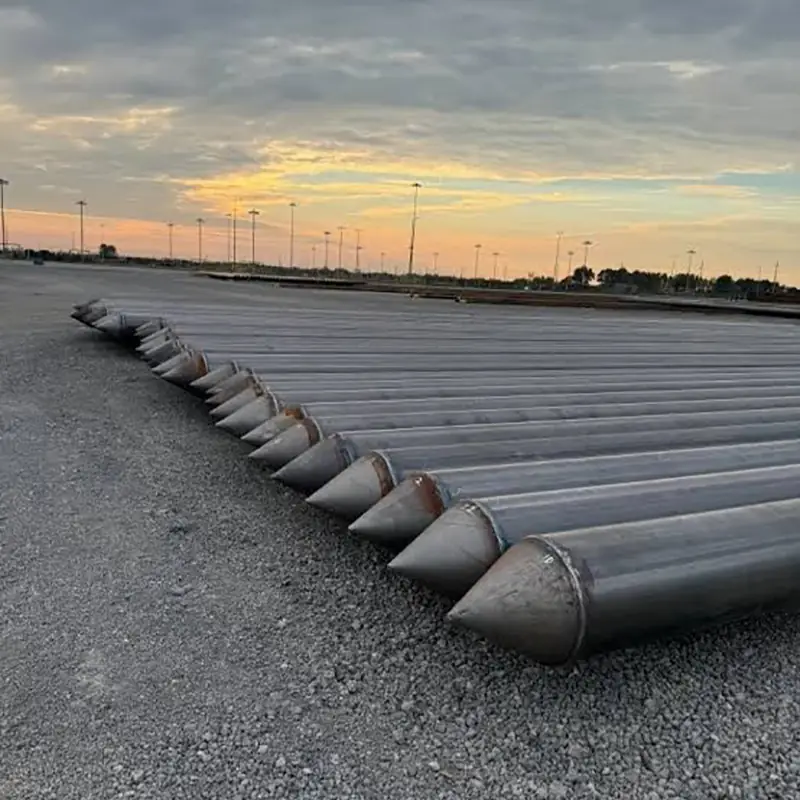
ASTM A500 Grade B Welded Piling Pipe 406mm OD with Conical Point for Soil Piling
Engineered to provide excellent ground consolidation and dependable end-bearing capacity, this ASTM A500 Grade B…
Heavy Wall Thickness SSAW Piling Pipe 1220mm OD for Marine Port Construction
Engineered to withstand the extreme dynamic loads and aggressive corrosive environments of maritime infrastructure, this…