
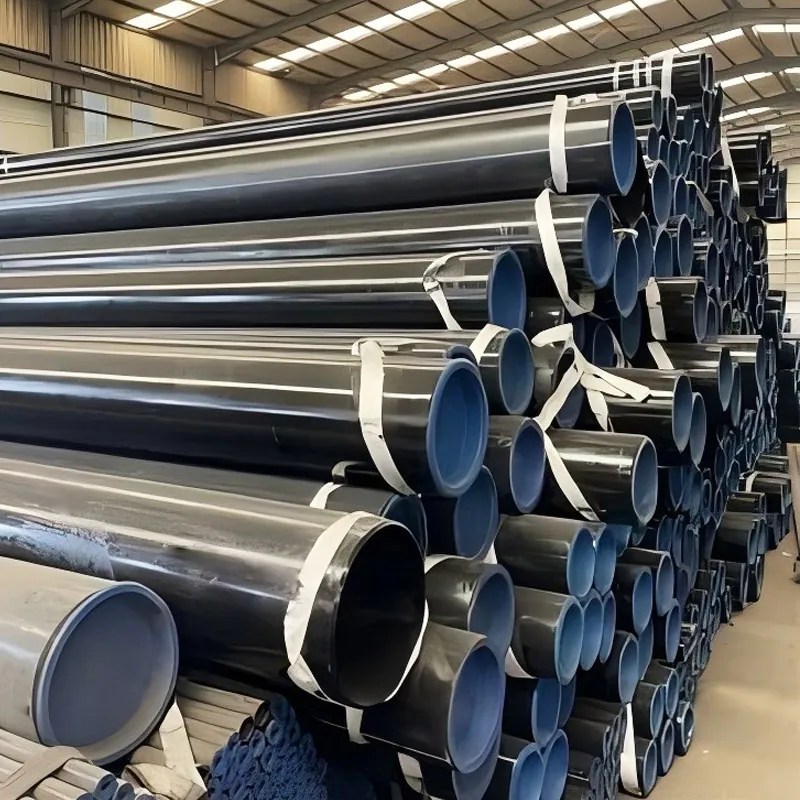
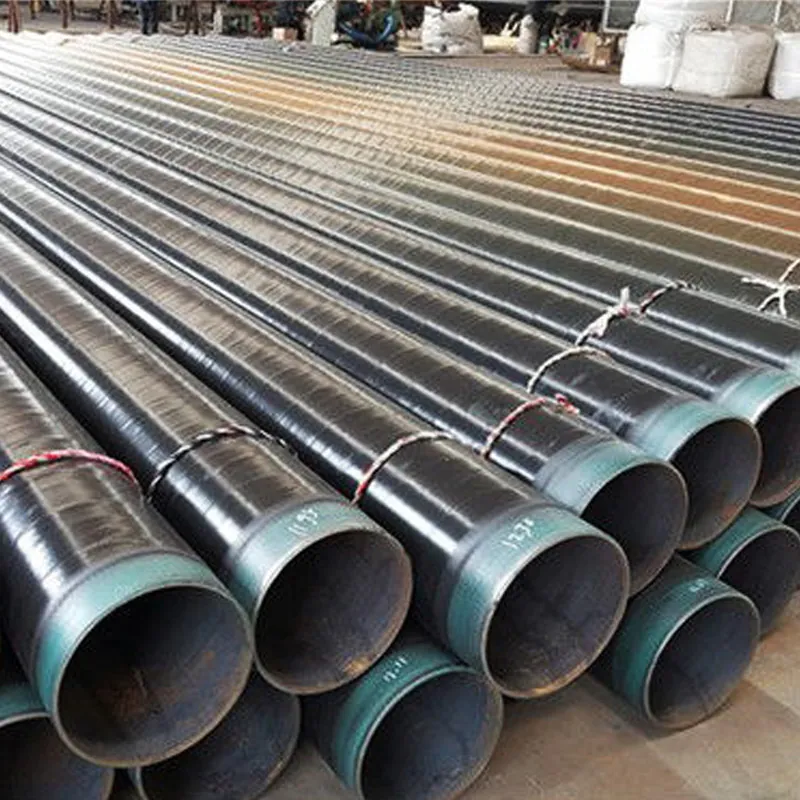
Features & Advantages
Technical Specifications
| Specification Item | Detailed Description |
| Product Name | EN 10255 Medium Series Galvanized Steel Tube |
| Standard Specification | EN 10255 (Non-alloy steel tubes suitable for welding and threading) |
| Weight Series | Medium Series (equivalent to former BS 1387 Class B) |
| Manufacturing Process | ERW (Electric Resistance Welded) followed by Hot-Dip Galvanizing |
| Nominal Diameter (DN) | DN50 (equivalent to 2 Inch) |
| Outer Diameter (OD) | 60.3 mm (Minimum 59.6 mm – Maximum 60.8 mm) |
| Wall Thickness (WT) | 3.6 mm (0.142 inches) |
| Galvanizing Standards | EN 10240 (internal/external quality class), EN ISO 1461, ASTM A53 |
| Zinc Coating Thickness | Minimum average of 55 to 70 microns (zinc weight ≥ 350 g/m²) |
| End Connection | Cold Roll-Grooved Ends conforming to AWWA C606 dimensions |
| Standard Length | 5.8m, 6.0m, or customized as per project logistics |
Product Applications
Rigorous Quality Control & Manufacturing Process
Frequently Asked Questions (FAQ)
A: EN 10255 classifies steel tubes primarily into Medium Series (wall thickness of 3.6mm for a DN50 pipe) and Heavy Series (wall thickness of 4.5mm). The Medium Series offers the most popular and highly economical balance of steel weight and mechanical strength, fully certified for fire water pressures in commercial and residential buildings.
A: Welding inside buildings creates high fire hazards (hot works) and requires certified welders. Threading reduces the steel wall mass, which can weaken the joints. Grooved ends allow for extremely rapid, weld-free mechanical assembly using flexible or rigid grooved couplings. This connection method absorbs piping thermal expansion, reduces noise transmission, and cuts installation labor by over 50%.
A: EN 10240 specifies strict quality classes for the internal and external zinc layers on steel tubes. Our hot-dip process ensures a thick, continuous 55–70 micron coating both inside and outside the tube. This prevents internal water tuberculation (rust scaling) that can clog sprinkler heads, while shielding the exterior from atmospheric moisture and condensation.
A: Yes. Dry pipe systems are filled with pressurized air or nitrogen and are highly vulnerable to localized corrosion caused by pooling condensation and trapped oxygen. The thick EN 10240 hot-dipped zinc lining provides an outstanding chemical barrier that completely halts oxygen-induced pitting, making it highly recommended for dry-pipe fire lines.
Related Steel Solutions
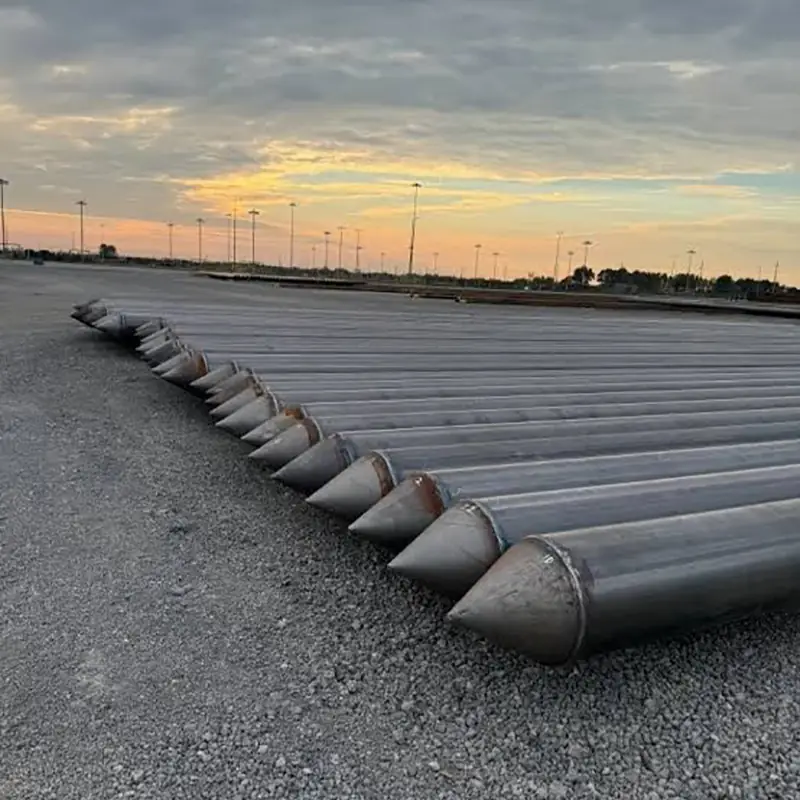
Bitumen Coated Piling Steel Pipe 813mm OD 12.7mm WT for Corrosive Soil Protection
Engineered to provide an exceptionally robust and cost-effective foundation barrier in the most aggressive subterranean…
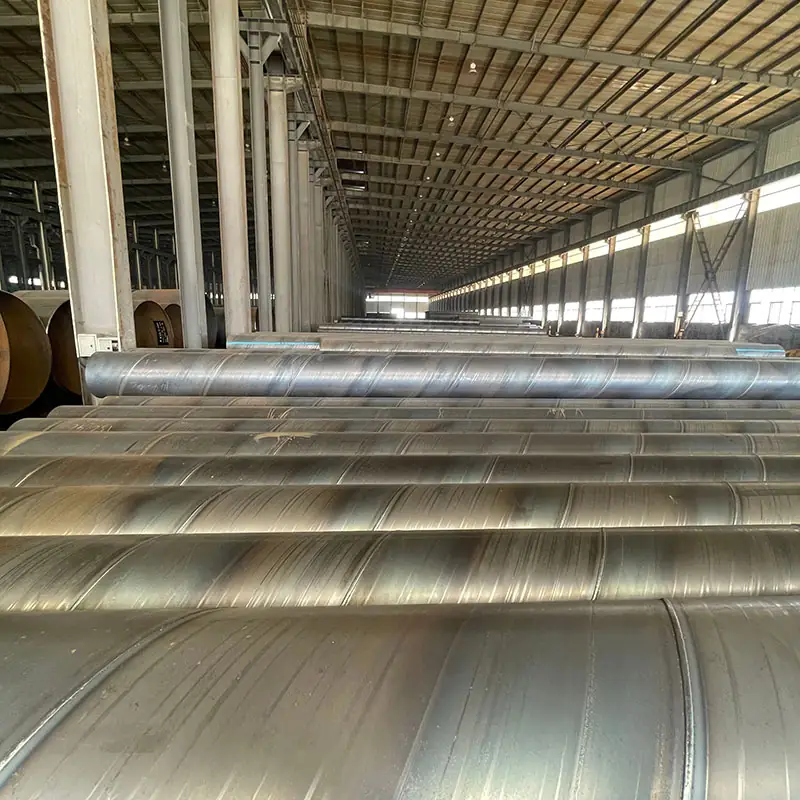
EN 10219 S355J2H LSAW Steel Pipe Pile 36 Inch 25.4mm WT for Offshore Wind Farm
Engineered to withstand the relentless cyclic wave actions and immense structural loads of offshore renewable…
ASTM A500 Grade B Welded Piling Pipe 406mm OD with Conical Point for Soil Piling
Engineered to provide excellent ground consolidation and dependable end-bearing capacity, this ASTM A500 Grade B…
Heavy Wall Thickness SSAW Piling Pipe 1220mm OD for Marine Port Construction
Engineered to withstand the extreme dynamic loads and aggressive corrosive environments of maritime infrastructure, this…