
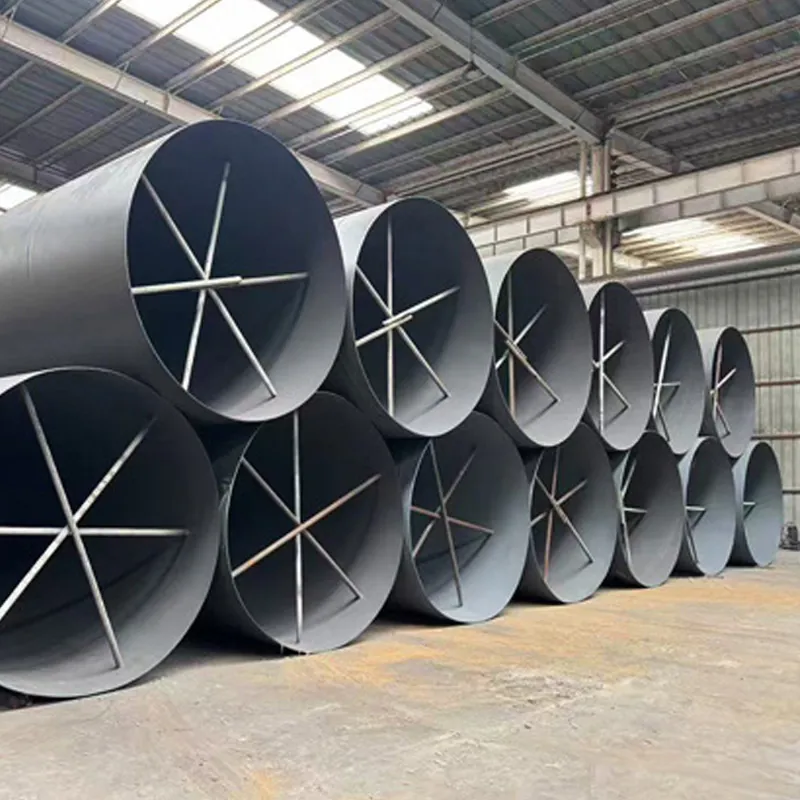
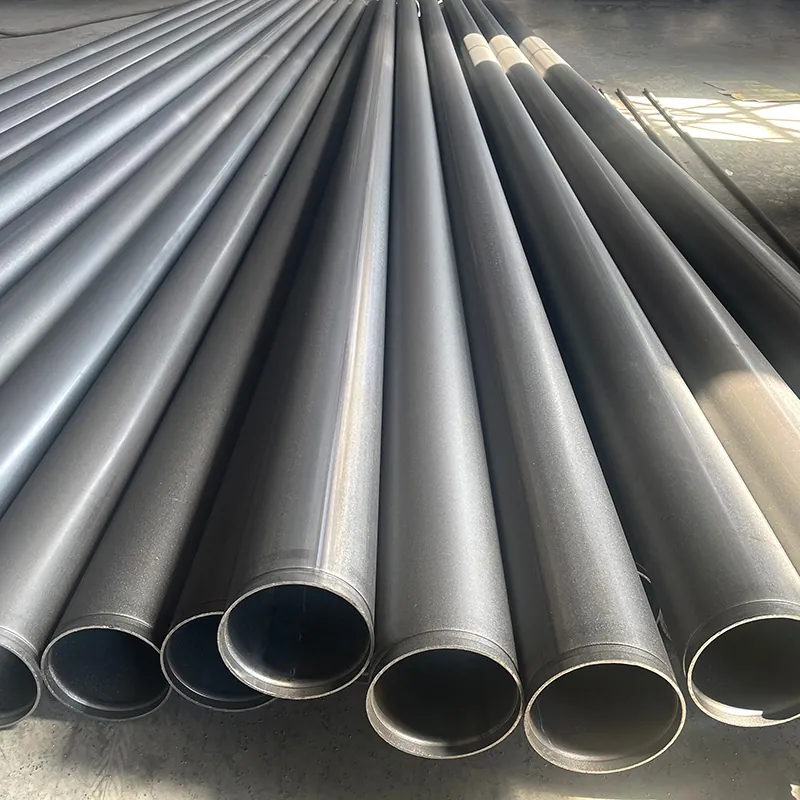
Features & Advantages
Technical Specifications
| Specification Item | Detailed Description |
| Product Name | BS 1387 Welded Steel Pipe with Epoxy Coal Tar Coating |
| Base Pipe Standard | BS 1387 (Specification for screwed and socketed steel tubes and tubulars) |
| Base Pipe Series | Medium Series or Heavy Series |
| Manufacturing Process | ERW (Electric Resistance Welding) / Welded |
| Nominal Pipe Size (NPS) | 4 Inch (DN100) |
| Outer Diameter (OD) | 114.3 mm (Min 113.1 mm – Max 114.9 mm) |
| Wall Thickness (WT) |
Medium Series: 4.5 mm (0.177 in) Heavy Series: 5.4 mm (0.213 in) |
| Anti-Corrosion Coating | Liquid Epoxy Coal Tar (Coal Tar Epoxy) Paint |
| Coating Standards | SSPC-Paint 16, AWWA C210, SY/T 0447 |
| Typical Dry Film Thickness (DFT) | 300 to 500 microns (12 to 20 mils) or customized |
| Pipe Ends | Plain Ends, Beveled for welding (with cutback), or Threaded and Coupled (T&C) to BS 21 |
| Standard Length | 5.8m, 6.0m, or customized |
Product Applications
Rigorous Quality Control & Manufacturing Process
Frequently Asked Questions (FAQ)
A: BS 1387 classifies steel tubes into Light, Medium, and Heavy series. For industrial acid environments and buried utilities, Medium Series (4.5 mm wall thickness) or Heavy Series (5.4 mm wall thickness) are recommended to provide the necessary mechanical strength and safety margins against soil movement and internal pressure.
A: Coal tar epoxy is a thermosetting polymer with a highly cross-linked molecular structure. This structure exhibits exceptional chemical inertness, making the coating highly resistant to dilute inorganic acids (such as sulfuric and hydrochloric acids), organic acids, saline solutions, and aggressive microbial activity found in low-pH soils.
A: Yes. Under the BS 1387 specification, these pipes are designed to support screwed and socketed (threaded and coupled) connections using BS 21 pipe threads. When ordered, we leave the threaded section bare of epoxy coal tar to ensure proper mechanical sealing during installation on-site.
A: The pipes are supplied with factory bare steel “cutbacks” at the ends. After field butt-welding and weld inspection, the joint area is thoroughly cleaned. Pipeline crews then apply cold-applied, chemical-resistant coal tar tapes or coat the joint with high-build liquid epoxy coal tar paint to match the pipeline’s high-performance protective barrier.
Related Steel Solutions
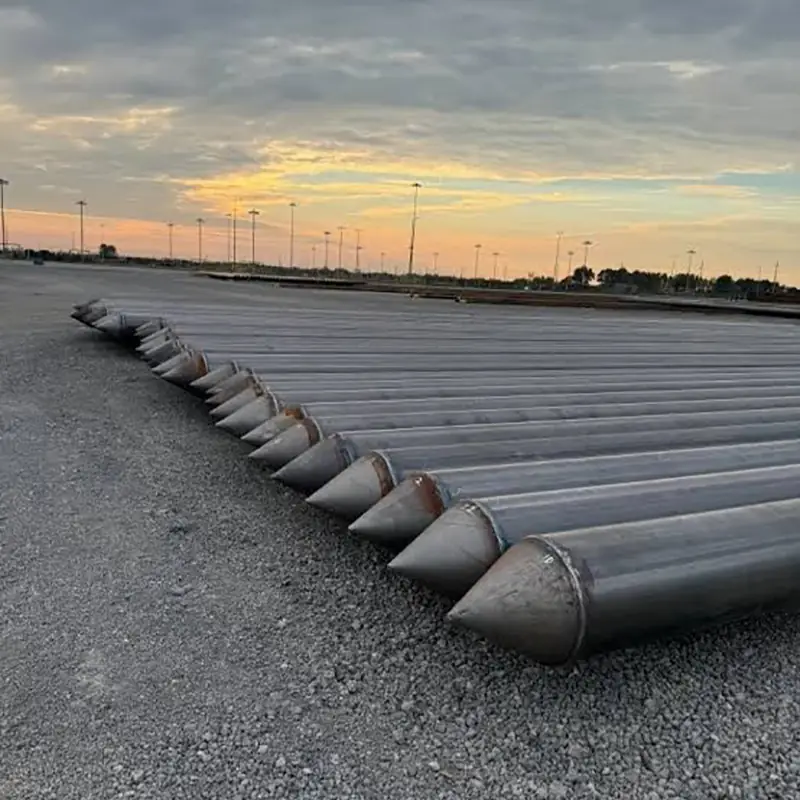
Bitumen Coated Piling Steel Pipe 813mm OD 12.7mm WT for Corrosive Soil Protection
Engineered to provide an exceptionally robust and cost-effective foundation barrier in the most aggressive subterranean…
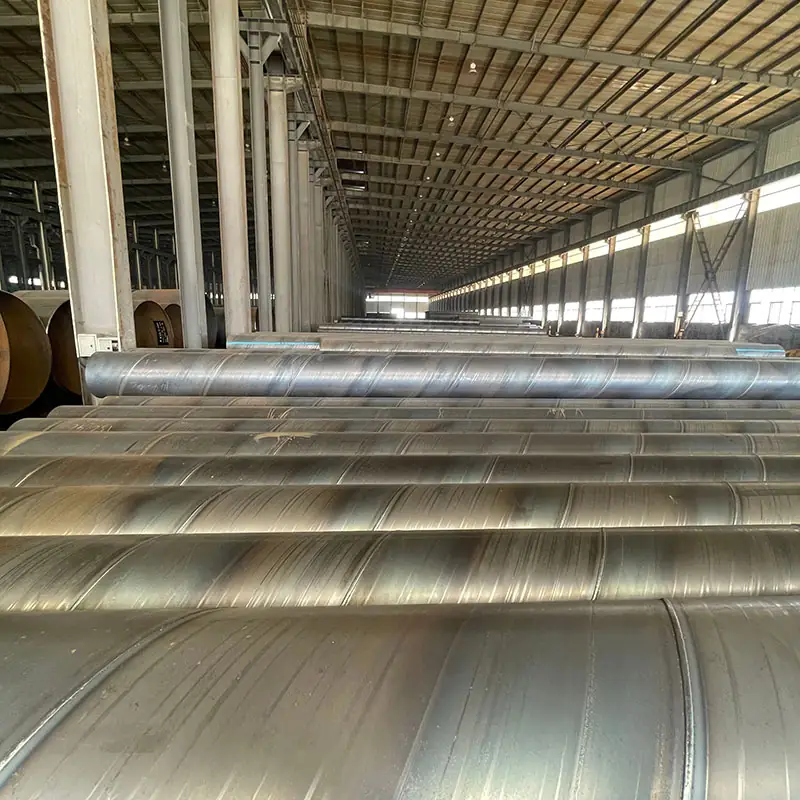
EN 10219 S355J2H LSAW Steel Pipe Pile 36 Inch 25.4mm WT for Offshore Wind Farm
Engineered to withstand the relentless cyclic wave actions and immense structural loads of offshore renewable…
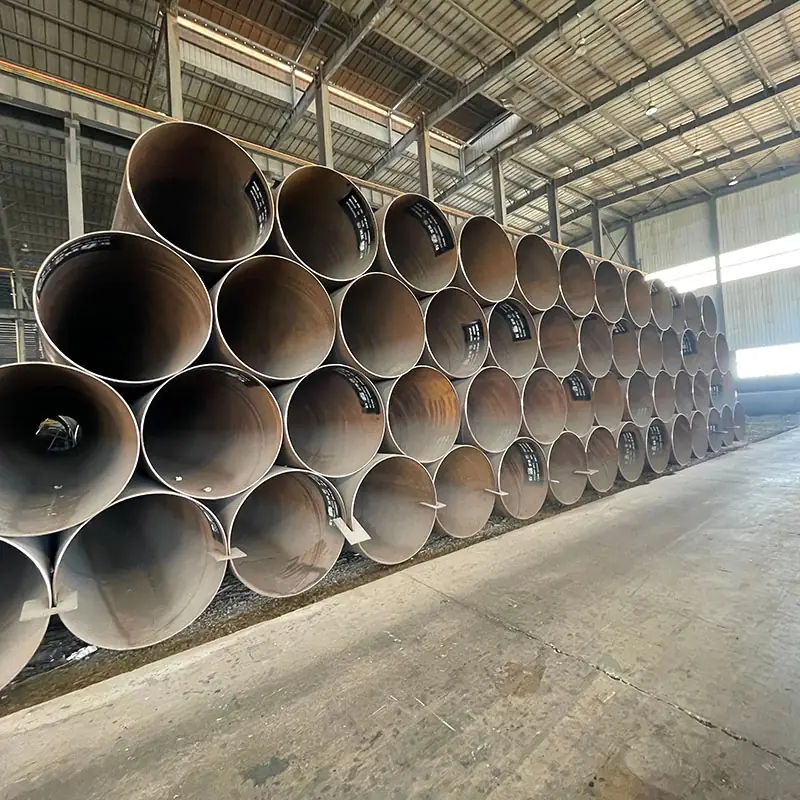
ASTM A500 Grade B Welded Piling Pipe 406mm OD with Conical Point for Soil Piling
Engineered to provide excellent ground consolidation and dependable end-bearing capacity, this ASTM A500 Grade B…
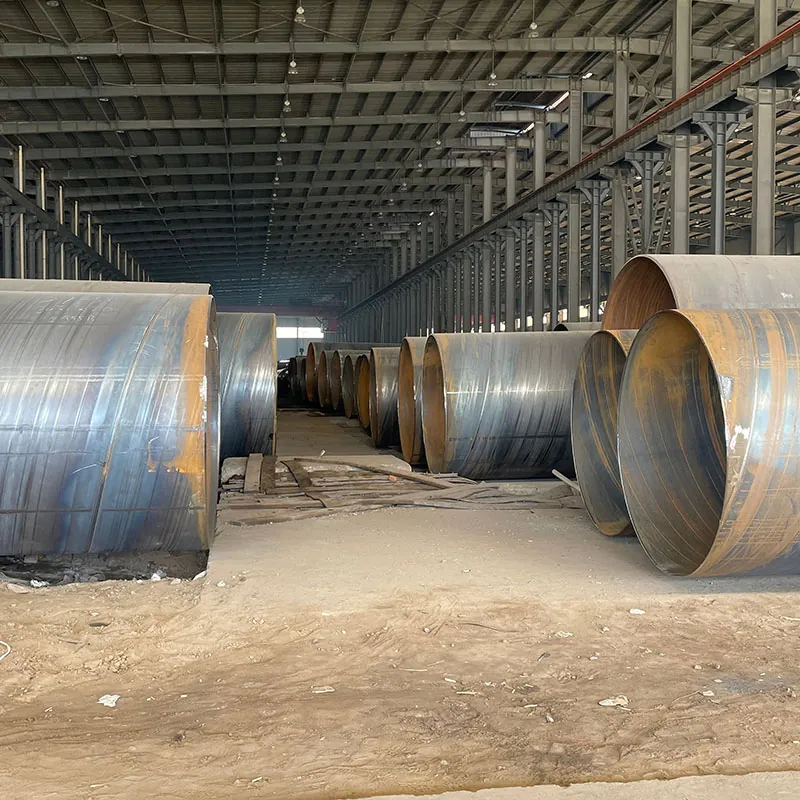
Heavy Wall Thickness SSAW Piling Pipe 1220mm OD for Marine Port Construction
Engineered to withstand the extreme dynamic loads and aggressive corrosive environments of maritime infrastructure, this…