
Key Features & Advantages
Technical Specifications
| Parameter | Specification Details |
| Outer Diameter (OD) | 50 mm |
| Wall Thickness (WT) | 1.0 mm to 3.5 mm |
| Material Grade | High-Quality Carbon Steel (Q195 / Q235 / ASTM A53) |
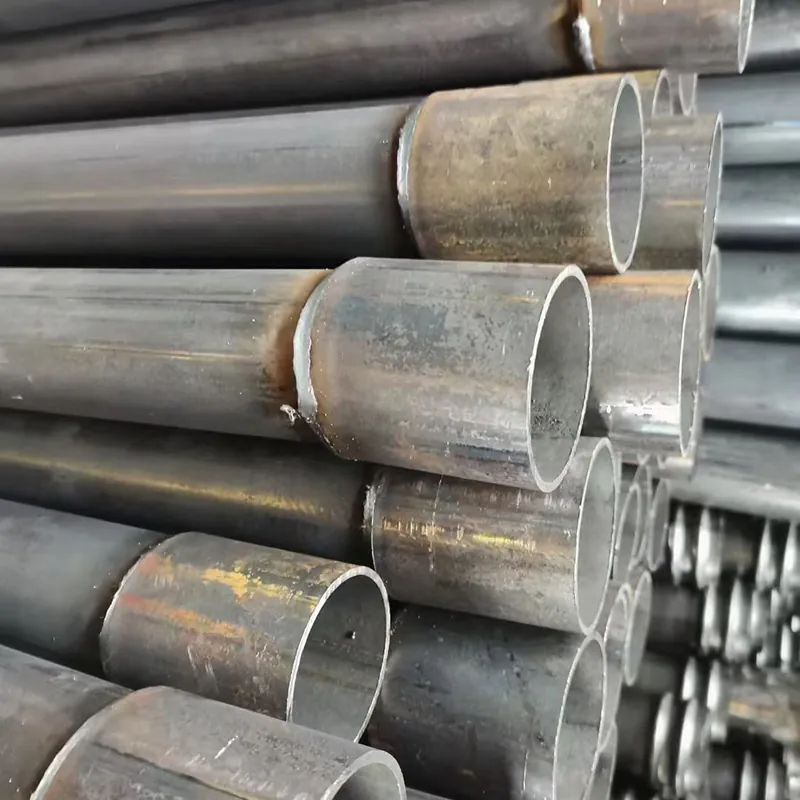
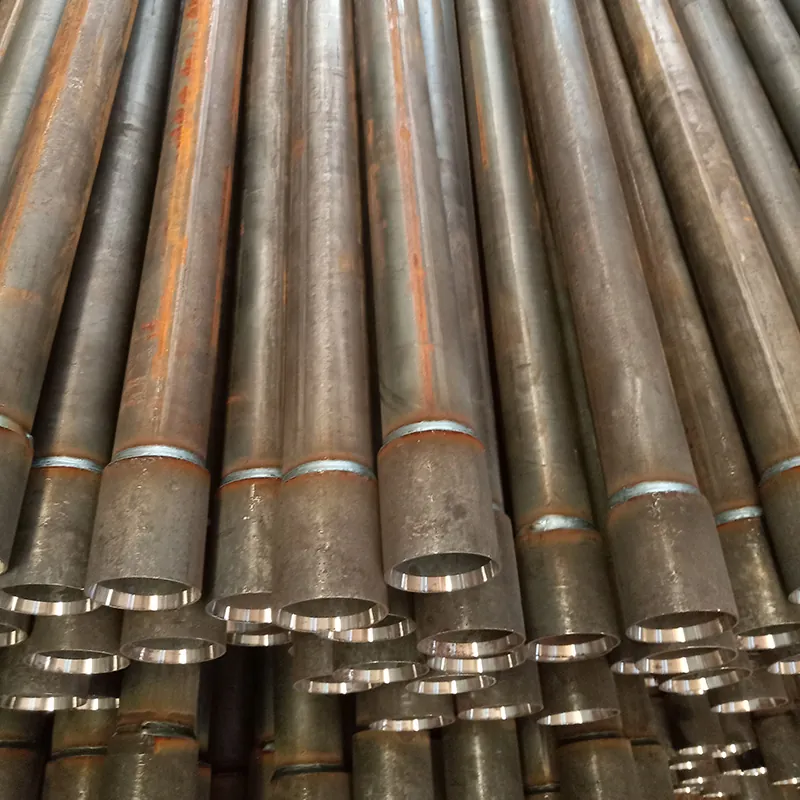
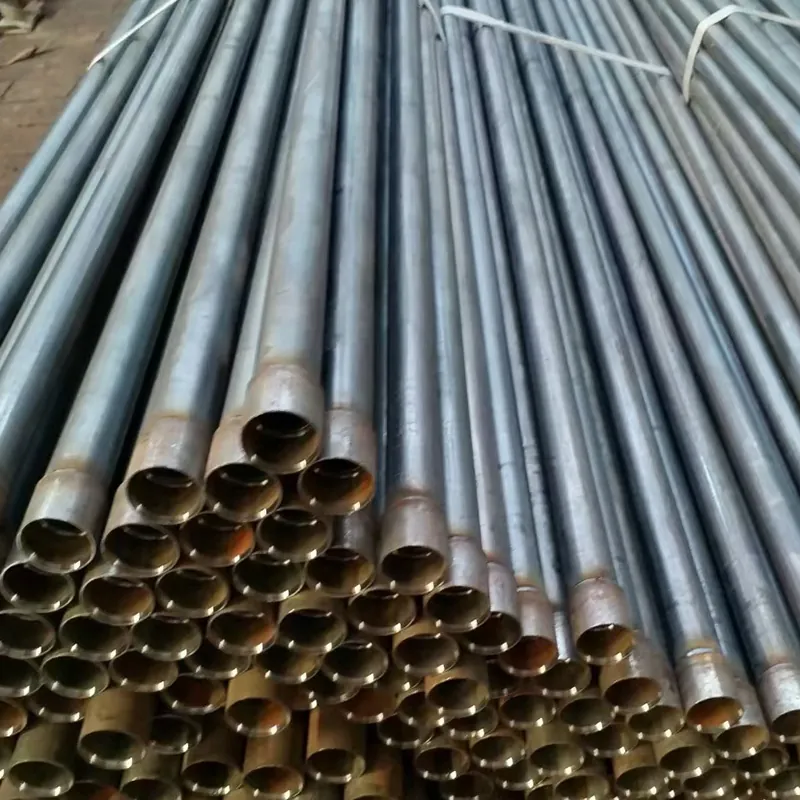
| Connection Method | Sleeve Overlap + Fillet Welding |
| Sleeve Length | 80 mm to 150 mm (Customizable) |
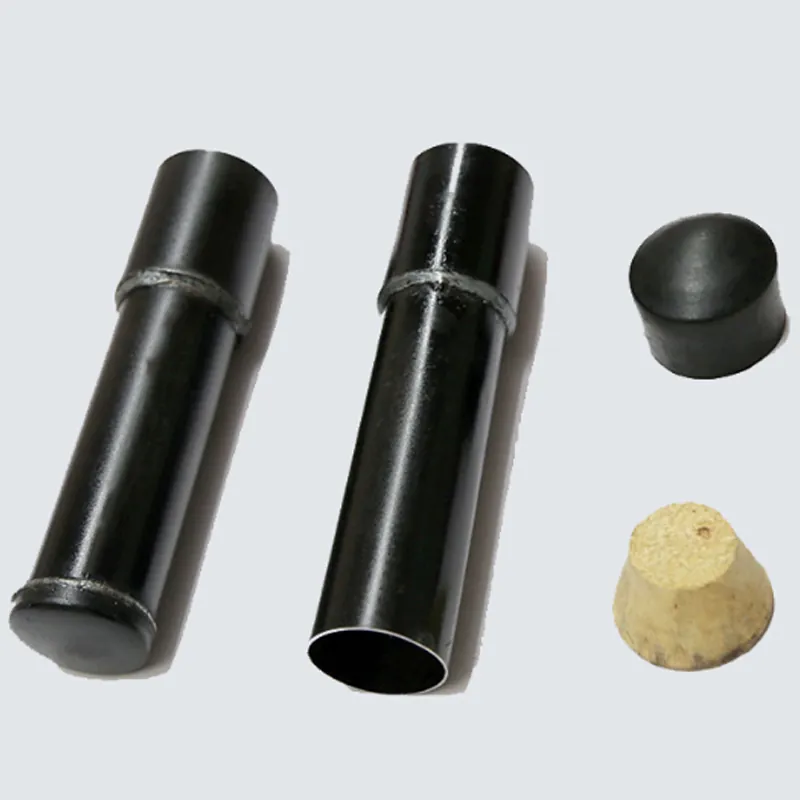
| Surface Treatment | Bare (uncoated) / Black Varnished |
Quality Control & Precision Standards
Burr-Free Pipe Ends
Precise Sleeve Alignment
Installation Instructions
Frequently Asked Questions (FAQ)
A: A φ50 Weld-on sonic logging pipe is designed for permanent joints connected via on-site sleeve welding. Standard civil projects specify weld-on tubes because a properly executed steel-to-steel weld joint delivers identical tensile strength and structural rigidity as the parent pipe body. It eliminates any reliance on rubber seals or mechanical threads, providing maximum structural reliability at an economical price point.
A: To ensure fast and precise alignment on the rebar cage platform, we offer Enlarged Socket Sleeves (bell ends) pre-welded to the pipe end. The socket-sleeve option allows the next pipe to slide easily into the pre-expanded end of the lower pipe, maintaining axial alignment and creating a natural lap joint that your site welders can fuse quickly.
A: We utilize premium low-carbon steel (such as Q235B or ASTM A53 Grade A/B) specifically selected for its low carbon equivalent (CEV). This chemistry ensures outstanding weldability under standard field conditions, minimizing the risk of weld cracking or embrittlement during rapid cooling. All properties are certified via our EN 10204 3.1 Mill Test Certificate (MTC).
A: No. For our sleeve-welded configurations, the fillet weld is executed entirely on the outside lip of the expanded sleeve. The inner channel remains perfectly smooth and uncompromised by heat or slag, guaranteeing an unobstructed, straight path for the CSL ultrasonic probes to lower smoothly.
A: Yes. We provide heavy-duty, pre-welded watertight steel bottom plates to seal the base of the first tube string. For the top of the tubes, we supply temporary plastic or steel caps to prevent concrete splashes, mud, or rainwater from introducing debris into the testing channel during cage installation.
Related Steel Solutions
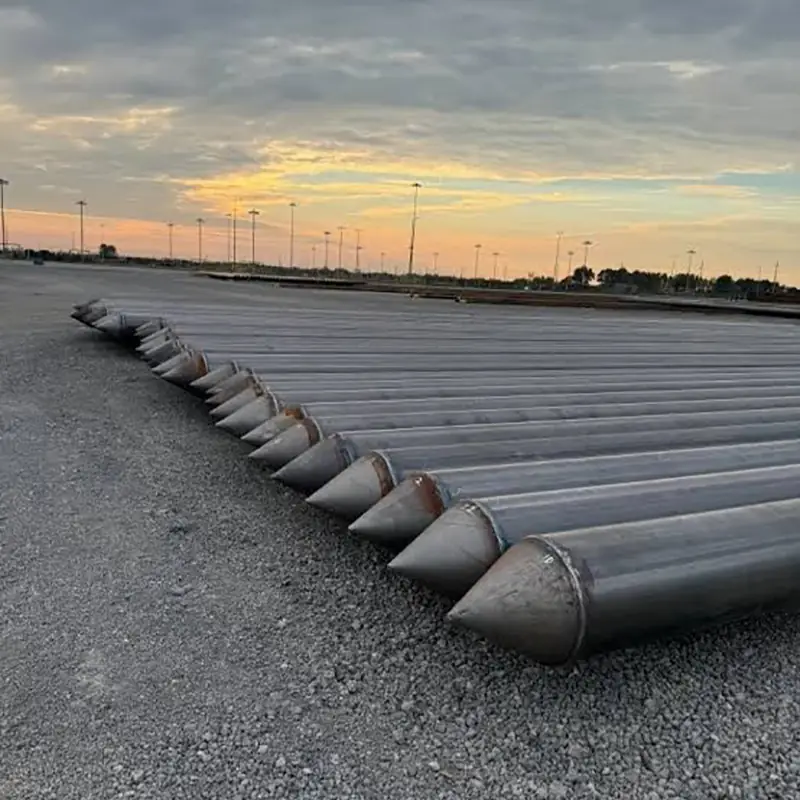
Bitumen Coated Piling Steel Pipe 813mm OD 12.7mm WT for Corrosive Soil Protection
Engineered to provide an exceptionally robust and cost-effective foundation barrier in the most aggressive subterranean…
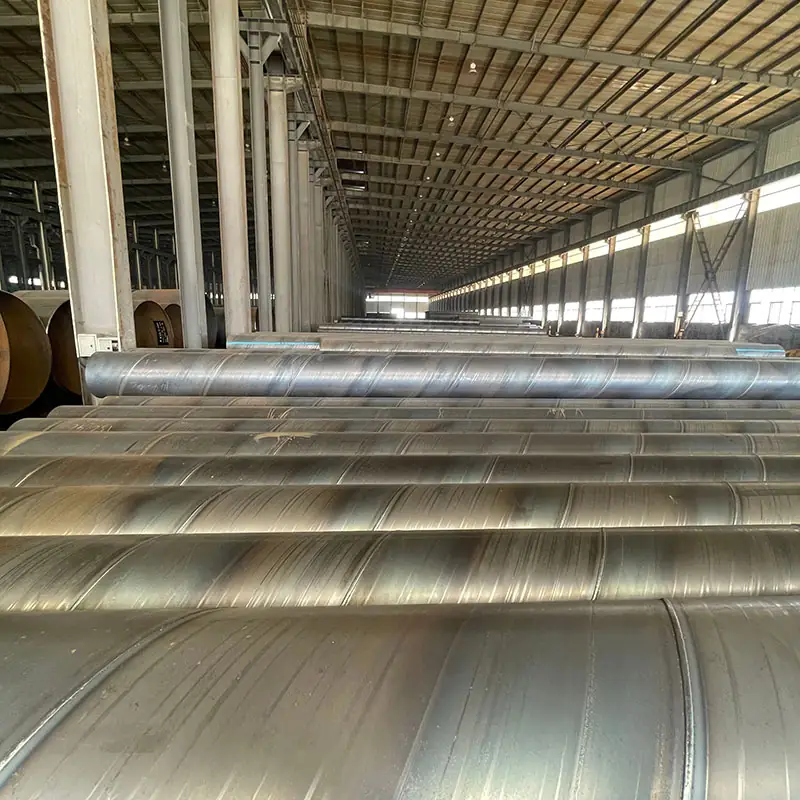
EN 10219 S355J2H LSAW Steel Pipe Pile 36 Inch 25.4mm WT for Offshore Wind Farm
Engineered to withstand the relentless cyclic wave actions and immense structural loads of offshore renewable…
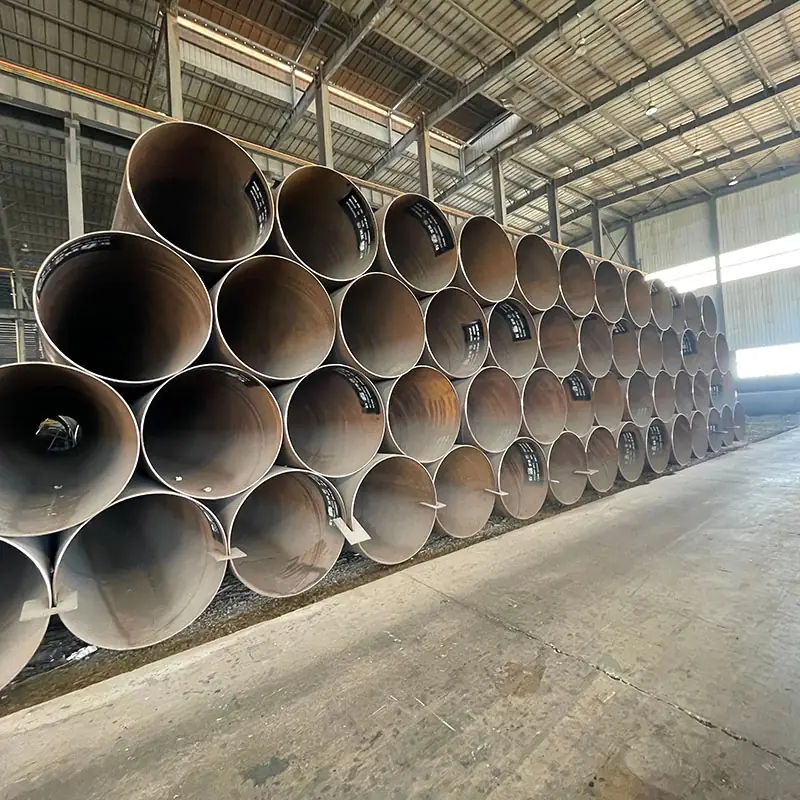
ASTM A500 Grade B Welded Piling Pipe 406mm OD with Conical Point for Soil Piling
Engineered to provide excellent ground consolidation and dependable end-bearing capacity, this ASTM A500 Grade B…
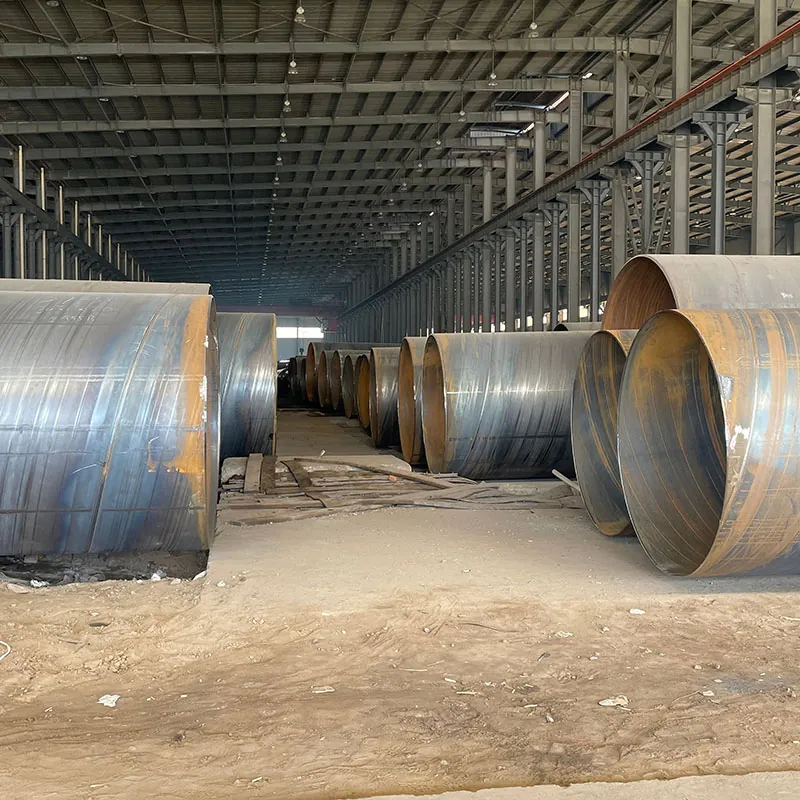
Heavy Wall Thickness SSAW Piling Pipe 1220mm OD for Marine Port Construction
Engineered to withstand the extreme dynamic loads and aggressive corrosive environments of maritime infrastructure, this…