
Introduction
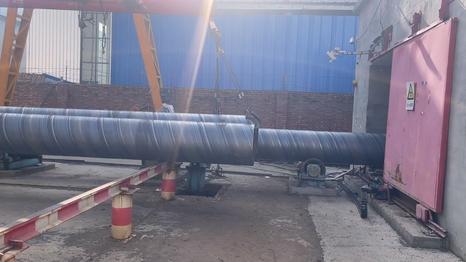
Spiral welded steel pipes have become a cornerstone in various industrial sectors, thanks to their unique manufacturing process and versatile applications. Unlike traditional straight seam welded pipes, spiral welded pipes are formed by winding a steel strip into a spiral shape and then welding the edges together. This method offers several advantages, including enhanced strength, flexibility in size, and cost-effectiveness. In this comprehensive guide, we will explore different types of spiral welded steel pipes, their applications, and the benefits they offer.
1.Types of Spiral Welded Steel Pipes
Spiral welded steel pipes, a vital category in the realm of piping systems, are widely utilized across various industries due to their unique manufacturing process and versatile properties. These pipes are formed by winding a steel strip at an angle and then welding it along the spiral seam, resulting in a strong and continuous structure. There are several distinct types of spiral welded steel pipes, each tailored to meet specific requirements and applications.
1.1 High-Strength Spiral Welded Steel Pipe
High-strength spiral welded steel pipes are engineered with a primary focus on withstanding high pressure and stress. Their design and construction make them an ideal choice for applications where structural integrity is of utmost importance. In construction projects, these pipes play a crucial role in providing robust support for buildings, bridges, and other large-scale structures. Their ability to bear heavy loads ensures the stability and safety of the entire construction, even under extreme conditions.
In the field of heavy machinery, high-strength spiral welded steel pipes are indispensable. They are used in the manufacturing of components such as frames, shafts, and hydraulic systems, where high stress and pressure are constantly present. These pipes can endure the rigorous demands of heavy-duty operations without compromising their performance or structural integrity.
Infrastructure projects, such as pipelines for oil and gas transportation, also rely heavily on high-strength spiral welded steel pipes. These pipelines often span long distances and are subjected to various external forces, including soil pressure, temperature changes, and seismic activity. The high tensile strength of these pipes enables them to resist deformation and maintain their shape, ensuring the safe and efficient flow of fluids over extended periods.
The advantages of high-strength spiral welded steel pipes are numerous. Their high tensile strength allows them to handle significant loads without breaking or bending, making them highly reliable in critical applications. Excellent durability is another key feature, as these pipes can withstand wear and tear over time, reducing the need for frequent replacements. Additionally, their resistance to deformation under load ensures that they maintain their structural integrity, even in challenging environments.[Link to High-Strength Spiral Welded Steel Pipes: The Backbone of Modern Infrastructure]
1.2 Corrosion-Resistant Spiral Welded Steel Pipe
Corrosion-resistant spiral welded steel pipes are specifically designed to combat the damaging effects of corrosion. They are coated with protective layers, such as zinc (galvanized) or specialized coatings, which act as a barrier between the steel pipe and the surrounding environment. This protection prevents rust from forming on the surface of the pipe, thereby extending its lifespan significantly.
These pipes are commonly used in environments where exposure to moisture or chemicals is a concern. For example, in water treatment plants, where pipes are constantly in contact with water and various chemicals, corrosion-resistant spiral welded steel pipes are essential to prevent leaks and ensure the purity of the water. In chemical processing industries, these pipes can withstand the corrosive nature of many chemicals, reducing the risk of pipe failure and potential safety hazards.[Link to Corrosion-Resistant Spiral Welded Steel Pipes: Protecting Your Investment]
The advantages of corrosion-resistant spiral welded steel pipes are evident in their longevity. By preventing rust and corrosion, these pipes can last for many years without requiring extensive maintenance or replacement. This reduces maintenance costs and downtime, improving overall operational efficiency. Moreover, in corrosive environments, the enhanced safety provided by these pipes is invaluable, as they minimize the risk of leaks and accidents that could have serious consequences.
1.3 Lightweight Spiral Welded Steel Pipe
Lightweight spiral welded steel pipes represent a significant advancement in piping technology. By utilizing advanced materials and manufacturing techniques, these pipes achieve an optimal balance between strength and weight. Compared to traditional steel pipes, they are significantly lighter, which offers several advantages in terms of transportation, handling, and installation.
The reduced weight of these pipes leads to lower transportation costs, as they require less fuel to transport and can be loaded more efficiently onto vehicles. This is particularly beneficial for large-scale projects where a large quantity of pipes needs to be transported over long distances. Easier handling is another advantage, as workers can move and position these pipes with less effort, reducing the risk of injuries and improving overall productivity.
Faster installation times are also a key benefit of lightweight spiral welded steel pipes. Their lighter weight makes them easier to lift and maneuver into place, allowing for quicker and more efficient installation. This can significantly reduce the overall construction time of a project, leading to cost savings and earlier completion dates.[Link to Lightweight Spiral Welded Steel Pipes: Efficiency in Motion]
1.4 Precision-Made Spiral Welded Steel Pipe
Precision-made spiral welded steel pipes are manufactured with tight tolerances and high precision, making them suitable for applications that require exact dimensions and smooth inner surfaces. These pipes are often used in industries such as automotive, aerospace, and precision engineering, where precision and quality are of the highest importance.
In the automotive industry, precision-made spiral welded steel pipes are used in the manufacturing of fuel lines, brake lines, and other critical components. The exact dimensions and smooth inner surfaces of these pipes ensure the efficient and reliable flow of fluids, which is essential for the proper functioning of the vehicle. In the aerospace industry, these pipes are used in aircraft hydraulic systems, where any deviation from the specified dimensions could have serious consequences for the safety and performance of the aircraft.[Link to Precision-Made Spiral Welded Steel Pipes: The Art of Engineering]
The advantages of precision-made spiral welded steel pipes include high accuracy, consistent quality, and improved flow characteristics. Their high accuracy ensures that they fit perfectly into the intended applications, reducing the need for adjustments or modifications. Consistent quality is maintained throughout the manufacturing process, ensuring that each pipe meets the same high standards. Improved flow characteristics are achieved through the smooth inner surfaces, which minimize friction and pressure drops, allowing for more efficient fluid flow.
2.Applications of Spiral Welded Steel Pipes
2.1 Oil and Gas Transmission
Spiral welded steel pipes are extensively employed in the oil and gas industry, playing a pivotal role in the transportation of crude oil, natural gas, and various other hydrocarbons. These pipes are engineered to withstand the rigorous demands of long-distance pipeline systems. Their high strength is a critical attribute, enabling them to endure the immense pressures exerted by the flowing hydrocarbons over vast distances without succumbing to deformation or rupture. Moreover, their resistance to pressure ensures that the integrity of the pipeline is maintained, minimizing the risk of leaks and spills that could have severe environmental and economic consequences.
The construction of spiral welded steel pipes involves a unique manufacturing process where the steel strip is coiled and welded along a spiral seam. This method results in pipes with a uniform wall thickness and consistent mechanical properties throughout their length. Such uniformity is essential for ensuring the reliable performance of the pipeline under varying operating conditions.
Our 【API 5L X42 Threaded Line Pipe | High Strength Oil & Gas Steel Pipe】 is a prime example of a product specifically designed for oil and gas transmission applications. It adheres to the stringent API 5L standard, which sets forth requirements for the manufacture and testing of line pipes used in the petroleum and natural gas industries. This pipe offers superior performance and reliability, with its high strength enabling it to handle the high-pressure environments typical of oil and gas pipelines. Its threaded ends facilitate easy connection and disconnection, making installation and maintenance more efficient.
2.2 Water Supply and Drainage
In the realm of water supply and drainage systems, spiral welded steel pipes emerge as a durable and cost-effective solution for transporting large volumes of water. These systems are vital for ensuring the availability of clean water for domestic, industrial, and agricultural use, as well as for the efficient disposal of wastewater.
Spiral welded steel pipes are highly resistant to corrosion, a significant advantage in water supply and drainage applications where the pipes are constantly exposed to water and various chemicals. This corrosion resistance extends the service life of the pipes, reducing the need for frequent replacements and minimizing maintenance costs. Additionally, these pipes can handle varying water pressures, from low-pressure systems in residential areas to high-pressure systems in industrial settings.
Our 【EN 10255 Threaded Steel Tube | European Standard Water & Building Pipe】 is tailored to meet European standards for water supply and building applications. It undergoes rigorous testing to ensure compliance with these standards, guaranteeing quality and safety. The threaded design of the pipe allows for easy installation and connection, facilitating the rapid construction of water supply and drainage networks.
2.3 Bridge Construction
Spiral welded steel pipes find widespread use in bridge construction due to their exceptional ability to withstand heavy loads and resist environmental factors such as wind and seismic activity. In modern bridge design, these pipes often form the structural framework, providing the necessary strength and stability to support the weight of the bridge deck, vehicles, and pedestrians.
The high strength-to-weight ratio of spiral welded steel pipes makes them an ideal choice for bridge construction. They can be designed to accommodate the specific load requirements of each bridge, ensuring optimal performance under varying traffic conditions. Furthermore, their resistance to environmental factors helps to prolong the lifespan of the bridge, reducing the need for costly repairs and renovations.
While our 【ASTM A53 Gr.B Threaded Pipe | Galvanized & Black Coated Steel Pipe】 is not directly a bridge construction pipe, it can be utilized in various structural components of bridge projects. Its strength and corrosion resistance make it suitable for use in support structures, handrails, and other non-load-bearing elements. The galvanized and black coatings provide additional protection against corrosion, enhancing the durability of the pipe in harsh outdoor environments.
2.4 Pile Foundation Engineering
In pile foundation engineering, spiral welded steel pipes play a crucial role in providing support for buildings, bridges, and other structures. These pipes are driven deep into the ground, where they interact with the surrounding soil to distribute the load of the structure evenly. Their high strength and durability make them ideal for this demanding application, as they must withstand the immense forces exerted by the structure above and the dynamic loads generated by soil movement.
Our 【BS 1387 Galvanized Screwed Pipe | Hot-Dip Zinc Coated Threaded Steel Pipe for Scaffolding & Structural Use】 can be adapted for pile foundation engineering. The hot-dip zinc coating provides excellent corrosion protection, ensuring that the pipe remains intact even in corrosive soil conditions. Its threaded design allows for easy connection and extension, facilitating the construction of pile foundations of varying lengths. The robust support offered by this pipe helps to ensure the stability and safety of the structures it supports.
3.Advantages of Spiral Welded Steel Pipes
The enhanced strength of spiral welded steel pipes is a direct result of their unique manufacturing process, which creates a seamless joint that significantly improves the pipe's overall structural integrity and resistance to pressure. Unlike traditional straight-seam welding, where the weld runs parallel to the length of the pipe, spiral welding involves winding a steel strip at an angle and welding it along a helical path. This method not only distributes stress more evenly across the pipe's circumference but also ensures that the weld seam is longer and more continuous, thereby enhancing the pipe's ability to withstand external forces.
One of the key benefits of this enhanced strength is the pipe's improved resistance to internal pressure. In applications such as oil and gas transportation, water supply, or chemical processing, pipes are often subjected to high pressures that can cause traditional pipes to deform or fail. Spiral welded steel pipes, however, are designed to handle such pressures with ease. The helical weld seam acts as a reinforcing element, preventing the pipe from expanding or collapsing under pressure. This makes them ideal for use in high-pressure environments where safety and reliability are paramount.
Moreover, the enhanced strength of spiral welded steel pipes also contributes to their durability and longevity. In harsh environments, such as those with extreme temperatures, corrosive substances, or mechanical stresses, pipes are constantly exposed to factors that can degrade their structural integrity. The seamless joint created by spiral welding, however, is less prone to cracking or leaking compared to traditional welds. This is because the helical weld seam distributes stress more evenly, reducing the likelihood of stress concentration points that can lead to failure. As a result, spiral welded steel pipes can withstand the test of time, even in the most demanding conditions.
Another aspect of the enhanced strength of spiral welded steel pipes is their ability to resist external forces, such as those caused by soil movement, vibrations, or impacts. In underground installations, for example, pipes may be subjected to shifting soil or ground movement, which can cause traditional pipes to bend or break. Spiral welded steel pipes, with their superior strength and flexibility, are better equipped to handle such forces without sustaining damage. This makes them a reliable choice for underground pipelines, where maintenance and replacement can be costly and time-consuming.
Furthermore, the enhanced strength of spiral welded steel pipes also translates into cost savings over the long term. Because they are less likely to fail or require replacement, these pipes can reduce downtime and maintenance costs associated with pipeline repairs. Additionally, their ability to withstand high pressures and external forces means that fewer pipes may be needed to achieve the same level of performance, further reducing material and installation costs.
In summary, the enhanced strength of spiral welded steel pipes is a critical advantage that sets them apart from traditional pipes. Their unique manufacturing process creates a seamless joint that improves the pipe's overall structural integrity, resistance to pressure, and durability. This makes them an ideal choice for a wide range of applications where safety, reliability, and cost-effectiveness are essential.
Conclusion
Spiral welded steel pipes offer a versatile and cost-effective solution for various industrial applications. From high-strength pipes for oil and gas transmission to corrosion-resistant pipes for water supply, their unique manufacturing process and diverse range of types make them an indispensable component in modern infrastructure. By understanding the different types and applications of spiral welded steel pipes, you can make informed decisions that ensure the success and longevity of your projects.