
Introduction
In the vast and intricate web of modern infrastructure, high-strength spiral welded steel pipes stand as silent yet indispensable sentinels. These pipes, often overlooked in the grandeur of skyscrapers, bridges, and sprawling pipeline networks, play a pivotal role in ensuring the stability, safety, and efficiency of countless structures and systems. From the towering heights of urban skylines to the depths of the Earth where oil and gas reserves lie, high-strength spiral welded steel pipes form the backbone that supports and connects our world. This article delves deep into the characteristics, applications, and benefits of these robust pipes, shedding light on their crucial role in shaping modern society.
1.Characteristics
1.1 Superior Tensile Strength and Durability
High-strength spiral welded steel pipes are meticulously engineered to possess exceptional tensile strength and durability. This is achieved through the use of high-grade steel, which undergoes a series of rigorous testing procedures to ensure it meets or exceeds industry standards for strength and performance. The steel used in these pipes is often alloyed with various elements to enhance its mechanical properties, such as increasing its resistance to corrosion, fatigue, and impact.
1.2 Spiral Welding Process
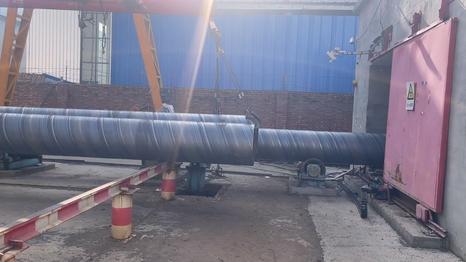
The spiral welding process is a key factor in the superior structural integrity of these pipes. Unlike traditional straight-seam welding, which can create stress concentrations at the weld joint, spiral welding distributes stress evenly across the entire circumference of the pipe. This is achieved by winding a continuous strip of steel around a mandrel at an angle, creating a helical seam that runs the length of the pipe. The seam is then welded using advanced welding techniques, such as submerged arc welding (SAW), which produces a high-quality, defect-free weld.
1.3 Uniform Wall Thickness
Another advantage of the spiral welding process is the ability to produce pipes with uniform wall thickness. This is crucial for ensuring consistent performance and reliability, especially in applications where the pipe is subjected to varying pressures and loads. Uniform wall thickness also simplifies the design and installation process, reducing the need for complex calculations and adjustments.
1.4 Customizable Dimensions
High-strength spiral welded steel pipes can be manufactured in a wide range of diameters and wall thicknesses to meet specific project requirements. This flexibility allows engineers and designers to select the most appropriate pipe size and thickness for their application, optimizing performance while minimizing material costs. Additionally, the pipes can be cut to length and threaded or flanged at the ends, facilitating easy installation and connection to other components.
2.Applications
2.1 Construction Projects
In the construction industry, high-strength spiral welded steel pipes are widely used as structural supports for buildings, bridges, and stadiums. Their superior strength and durability make them ideal for withstanding the immense loads and stresses imposed by these structures, ensuring their long-term stability and safety. For example, in high-rise buildings, these pipes can be used as columns or beams, providing critical support to the entire structure. In bridges, they can be used as piles or piers, anchoring the bridge to the ground and distributing the weight of traffic evenly.
2.2 Oil and Gas Industry
The oil and gas industry relies heavily on high-strength spiral welded steel pipes for the transportation of hydrocarbons over long distances under high pressure. These pipes must be able to withstand the corrosive effects of the oil and gas, as well as the extreme pressures and temperatures encountered during transportation. High-strength spiral welded steel pipes are well-suited for this application due to their superior corrosion resistance, high tensile strength, and ability to maintain structural integrity under pressure. They are used in a variety of pipeline systems, including gathering lines, transmission lines, and distribution lines, connecting oil and gas wells to processing facilities and end-users.
2.3 Mining Operations
In mining operations, high-strength spiral welded steel pipes are used to handle heavy loads and resist abrasion. They are often used as conveyor systems, transporting ore and other materials from the mine to the processing plant. The pipes must be able to withstand the weight of the materials being transported, as well as the abrasive action of the particles as they move through the pipe. High-strength spiral welded steel pipes are designed to meet these challenges, providing a durable and reliable solution for mining operations.
2.4 Water and Wastewater Treatment
High-strength spiral welded steel pipes are also used in water and wastewater treatment facilities. They are used to transport raw water from sources such as rivers and lakes to treatment plants, as well as to distribute treated water to end-users. The pipes must be able to withstand the corrosive effects of the water and chemicals used in the treatment process, as well as the pressure and flow rates encountered during transportation. High-strength spiral welded steel pipes are an ideal choice for this application due to their superior corrosion resistance and ability to maintain structural integrity under pressure.
3.Benefits
3.1 Ability to Withstand Extreme Conditions
The primary benefit of high-strength spiral welded steel pipes is their ability to withstand extreme conditions without failing. This reduces the risk of accidents and ensures the safety of workers and the public. Whether it's the high pressures and temperatures encountered in the oil and gas industry, the heavy loads and abrasive action in mining operations, or the corrosive effects of water and chemicals in treatment facilities, these pipes are designed to perform reliably under the most challenging conditions.
3.2 Longer Lifespan
High-strength spiral welded steel pipes have a longer lifespan than traditional pipes, reducing maintenance costs and downtime. Their superior corrosion resistance and ability to maintain structural integrity over time mean that they require less frequent replacement and repair, saving money and resources in the long run. This is especially important in applications where downtime can be costly, such as in the oil and gas industry or in critical infrastructure projects.
3.3 Versatility
The versatility of high-strength spiral welded steel pipes allows them to be used in a wide range of applications, making them a cost-effective solution for many industries. Their customizable dimensions and ability to be cut to length and threaded or flanged at the ends make them easy to install and connect to other components, simplifying the design and installation process. Additionally, their superior performance in extreme conditions means that they can be used in applications where traditional pipes would not be suitable, expanding their range of potential uses.
4.Product Connection
For projects that demand the highest level of strength and reliability, consider our 【API 5L X42 Threaded Line Pipe | High Strength Oil & Gas Steel Pipe】. This product is specifically designed to meet the rigorous demands of the oil and gas industry, offering superior performance and peace of mind. With its high tensile strength, excellent corrosion resistance, and ability to withstand extreme pressures and temperatures, this pipe is an ideal choice for transporting hydrocarbons over long distances. Its threaded ends facilitate easy installation and connection to other components, making it a versatile and cost-effective solution for a wide range of oil and gas applications.
[Back to Comprehensive Guide to Spiral Welded Steel Pipes: Types, Applications, and Advantages]