
Introduction
The spiral steel pipe manufacturing industry in China has witnessed remarkable growth and transformation over the past few decades. This evolution has been propelled by continuous technological advancements and an increasing focus on sustainability. As a vital component in various infrastructure projects, including oil and gas pipelines, water supply systems, and construction, spiral steel pipes are essential for the nation's development. This article delves into the journey of this industry, exploring key innovations and their contributions to both quality enhancement and environmental conservation.
1.Technological Innovations
1. 1 Advanced Welding Techniques
The adoption of high-frequency welding (HFW) and laser welding technologies has revolutionized the production of spiral steel pipes. HFW, in particular, has gained popularity due to its ability to produce high-quality welds at high speeds. This technique involves the use of high-frequency electrical current to heat the edges of the steel strip, which are then pressed together to form a seamless joint. The result is a pipe with uniform wall thickness and excellent mechanical properties, suitable for high-pressure applications.
Laser welding, on the other hand, offers unparalleled precision and control. By focusing a high-energy laser beam on the welding point, it achieves a narrow heat-affected zone, reducing the risk of thermal distortion and enhancing the overall integrity of the pipe. This technology is particularly beneficial for manufacturing pipes with complex geometries or those requiring stringent quality standards.
1.2 Automation and Robotics
Automation has played a pivotal role in streamlining the manufacturing process of spiral steel pipes. By integrating robotic systems into various stages of production, manufacturers have significantly reduced labor costs and improved operational efficiency. Robots are now employed for tasks such as material handling, welding, and inspection, ensuring consistent quality and minimizing human error.
For instance, automated welding robots can perform continuous welds with high precision, eliminating the need for manual intervention and reducing the likelihood of defects. Similarly, robotic inspection systems equipped with advanced sensors and imaging technologies can detect even the slightest imperfections in the pipes, ensuring compliance with international standards.
1.3 Material Science Advancements
Research into new steel alloys and coatings has led to the development of pipes with enhanced properties. Modern spiral steel pipes are now available with improved corrosion resistance, thanks to the incorporation of alloying elements such as chromium, nickel, and molybdenum. These elements form a protective oxide layer on the surface of the pipe, preventing rust and extending its service life.
In addition to alloying, advanced coating technologies such as fusion-bonded epoxy (FBE) and three-layer polyethylene (3LPE) have been widely adopted. These coatings provide an additional barrier against corrosion, making the pipes suitable for use in harsh environments. Furthermore, the development of self-healing coatings, which can repair minor damages automatically, represents a significant breakthrough in the field.
2.Sustainability Practices
2.1 Energy Efficiency
Manufacturers are increasingly investing in energy-efficient equipment and processes to reduce their carbon footprint. This includes the use of high-efficiency motors, variable frequency drives, and heat recovery systems. By optimizing energy consumption, manufacturers not only lower their operational costs but also contribute to the global effort to combat climate change.
For example, some factories have installed solar panels on their rooftops to generate renewable energy for their operations. Others have implemented cogeneration systems, which simultaneously produce electricity and heat, improving overall energy utilization efficiency.
2.2 Waste Reduction
Implementing recycling programs and optimizing material usage has become a priority for spiral steel pipe manufacturers. By recycling scrap metal and reusing process water, manufacturers minimize waste generation and conserve natural resources. Additionally, advanced cutting and forming techniques have reduced material wastage during production, leading to higher yields and lower costs.
Some manufacturers have also adopted lean manufacturing principles, which focus on eliminating waste in all forms, including time, inventory, and motion. By streamlining their operations and improving workflow efficiency, they can produce more with less, further reducing their environmental impact.
2.3 Environmental Certifications
Many factories are obtaining ISO 14001 and other environmental certifications to demonstrate their commitment to sustainable practices. ISO 14001 is an international standard that specifies requirements for an effective environmental management system (EMS). By achieving this certification, manufacturers can showcase their ability to identify, manage, and mitigate environmental risks, ensuring compliance with relevant regulations and standards.
In addition to ISO 14001, some manufacturers are also pursuing certifications such as LEED (Leadership in Energy and Environmental Design) for their facilities and products. These certifications not only enhance their reputation but also open up new market opportunities, as more clients and consumers prioritize sustainability in their purchasing decisions.
3.Case Study: A Leading Spiral Steel Pipe Manufacturer
3.1 Company Profile
CangTie Steel Pipes Co., Ltd. is a top spiral steel pipe manufacturer in China, renowned for its innovative approaches and sustainable practices. With a history spanning over three decades, the company has established itself as a leader in the industry, supplying high-quality pipes to clients worldwide.
3.2 Production Process
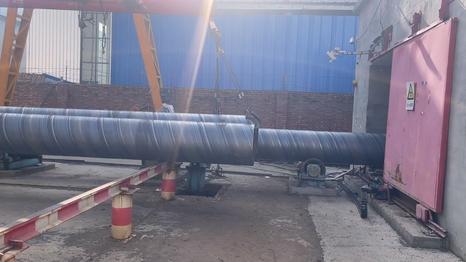
CangTie Steel Pipes' state-of-the-art production line begins with the careful selection of raw materials. The company sources high-grade steel strips from reputable suppliers, ensuring consistent quality and performance. These strips are then subjected to a series of processes, including forming, welding, and sizing, to produce spiral steel pipes of various diameters and wall thicknesses.
The forming process involves bending the steel strip into a spiral shape using specialized machinery. This is followed by high-frequency welding, where the edges of the strip are joined together to form a continuous seam. The welded pipe then undergoes sizing and straightening to achieve the desired dimensions and straightness. Finally, the pipe is inspected for defects and coated with a protective layer to enhance its corrosion resistance.
3.3 Sustainability Initiatives
CangTie Steel Pipes is committed to reducing its environmental impact through various initiatives. The company has invested in energy-efficient equipment, such as high-efficiency motors and heat recovery systems, to lower its energy consumption. It has also implemented a comprehensive recycling program, recycling scrap metal and reusing process water to minimize waste generation.
Furthermore, CangTie Steel Pipes has embraced renewable energy sources by installing solar panels on its factory rooftops. These panels generate a significant portion of the company's electricity needs, reducing its reliance on fossil fuels. The company is also exploring other renewable energy options, such as wind power, to further diversify its energy mix.
In terms of green supply chain management, CangTie Steel Pipes works closely with its suppliers to ensure they adhere to sustainable practices. The company conducts regular audits of its suppliers' facilities to assess their environmental performance and provides guidance on improving their sustainability practices. By fostering a culture of sustainability throughout its supply chain, CangTie Steel Pipes is able to minimize its overall environmental impact.
Conclusion
The spiral steel pipe manufacturing industry in China is at the forefront of innovation and sustainability. By embracing new technologies such as advanced welding techniques, automation, and material science advancements, manufacturers are improving product quality and efficiency. Simultaneously, their adoption of eco-friendly practices, including energy efficiency, waste reduction, and environmental certifications, is contributing to a greener future.
As the demand for high-quality spiral steel pipes continues to grow, Chinese manufacturers are well-positioned to meet this demand while upholding their commitment to sustainability. By continuing to innovate and adopt sustainable practices, they can not only enhance their competitiveness in the global market but also play a crucial role in building a more sustainable world.