
Introduction
China has emerged as a global leader in steel pipe manufacturing, offering a diverse range of products tailored to various industrial needs. Among these, spiral steel pipes and Electric Resistance Welded (ERW) pipes stand out for their unique production processes, cost-effectiveness, and versatile applications. This comprehensive guide delves into the intricacies of spiral steel pipe production, highlights top manufacturers, and explores the nuances of ERW pipe technology, providing insights into their significance, performance comparisons, and specific product offerings.
1.Spiral Steel Pipe Production in China
1.1 Process Overview: The Intricacies of Spiral Steel Pipe Manufacturing
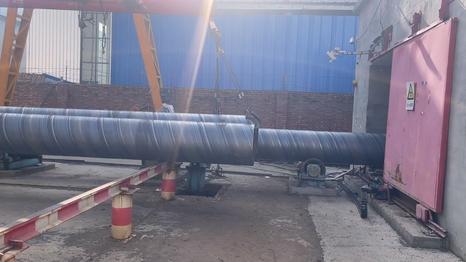
Spiral steel pipes, also known as helical submerged arc welded (HSAW) pipes, are a vital component in various industrial sectors, including oil and gas, water supply, and structural engineering. The production process of these pipes is a fascinating blend of precision engineering and advanced technology.
The manufacturing journey begins with the selection of high-quality steel strips, which are typically sourced from reputable steel mills. These strips are then subjected to a series of pre-treatment processes, including cleaning and surface preparation, to ensure optimal welding conditions. The core of the production process involves winding the steel strip into a precise spiral shape around a mandrel. This step requires sophisticated machinery capable of maintaining consistent tension and alignment to achieve the desired pipe diameter and wall thickness.
Once the steel strip is wound into the spiral form, the edges are brought together and welded using the submerged arc welding (SAW) technique. This method involves feeding a continuous wire electrode into the joint area, while a granular flux is simultaneously applied to shield the weld from atmospheric contamination. The result is a strong, uniform weld that ensures the structural integrity of the pipe. After welding, the pipe undergoes a series of post-welding treatments, such as heat treatment and straightening, to enhance its mechanical properties and dimensional accuracy. Finally, the pipe is inspected using non-destructive testing methods, such as ultrasonic testing and X-ray inspection, to detect any potential defects and ensure compliance with quality standards.[Link to The Evolution of Spiral Steel Pipe Manufacturing in China: Innovations and Sustainability]
1.2 Top Manufacturers: Pioneers in Spiral Steel Pipe Production
China is home to several leading spiral steel pipe manufacturers that have earned global recognition for their advanced technology, superior quality, and commitment to innovation. These companies have invested heavily in research and development, continuously improving their production processes and introducing new products to meet the evolving needs of the market.
One of the key factors contributing to the success of Chinese spiral steel pipe manufacturers is their adherence to international standards. Many companies follow standards such as GB9711, which specifies the technical requirements for the delivery of steel pipes for pipeline transportation systems in the petroleum and natural gas industries. By complying with these standards, Chinese manufacturers ensure that their products are of high quality and can be seamlessly integrated into global supply chains.
In addition to international standards, Chinese manufacturers also focus on implementing robust quality assurance systems. They employ a team of experienced quality control professionals who monitor every stage of the production process, from raw material inspection to final product testing. This rigorous quality control approach ensures that each spiral steel pipe meets the highest standards of performance and reliability.
1.3 350mm Spiral Steel Pipe Factory: A Case Study in Excellence
Let's take a closer look at a specific factory that specializes in the production of 350mm spiral steel pipes. This factory is equipped with state-of-the-art machinery and employs a skilled workforce, enabling it to achieve a high production capacity while maintaining exceptional quality standards.
The factory's production capacity is impressive, with the ability to produce a large number of 350mm spiral steel pipes per day. This high output is made possible by the efficient layout of the production line and the use of automated equipment that reduces manual labor and increases productivity.
Quality control is a top priority at this factory. The company has implemented a comprehensive quality management system that covers every aspect of the production process. From raw material inspection to final product testing, each step is carefully monitored to ensure that the pipes meet the required specifications. The factory also conducts regular audits and inspections to identify areas for improvement and continuously enhance its quality control measures.
In terms of market reach, the factory has established a strong presence both domestically and internationally. Its products are widely used in various industries, including oil and gas, water supply, and construction. The factory's commitment to quality and customer satisfaction has earned it a reputation for reliability and excellence, leading to long-term partnerships with clients around the world.
1.4 Carbon Steel Spiral Welded Pipe Plant: Driving Energy and Infrastructure Development
Another notable player in the Chinese spiral steel pipe industry is a state-of-the-art plant that specializes in carbon steel spiral welded pipes. This plant plays a crucial role in the energy sector and infrastructure development, providing high-quality pipes for pipelines, structural supports, and other applications.
The plant's focus on carbon steel spiral welded pipes is driven by the growing demand for these products in the energy industry. Carbon steel pipes are known for their strength, durability, and corrosion resistance, making them ideal for transporting oil, gas, and other fluids over long distances. The plant's advanced production technology and strict quality control measures ensure that its pipes meet the stringent requirements of the energy sector.
In addition to the energy sector, the plant's carbon steel spiral welded pipes are also widely used in infrastructure development projects, such as bridges, buildings, and water treatment facilities. The pipes' high strength and versatility make them suitable for a variety of structural applications, contributing to the safety and stability of these projects.
Overall, China's spiral steel pipe production industry is a thriving sector that combines advanced technology, strict quality control, and a commitment to innovation. With leading manufacturers, specialized factories, and state-of-the-art plants, China is well-positioned to meet the global demand for high-quality spiral steel pipes and drive the development of various industries around the world.
2.ERW Pipe Manufacturing Technology
2.1 Understanding the ERW Process
The ERW (Electric Resistance Welding) pipe manufacturing process is a widely utilized method in the pipe - making industry. It begins with the selection of high - quality steel strips, which serve as the raw material. These steel strips are typically sourced from steel coils and are carefully inspected for any defects or irregularities that could affect the final pipe quality.
The core principle of the ERW process is to use electric resistance to weld the edges of the rolled steel strip. First, the steel strip is fed into a series of rollers. These rollers gradually shape the flat strip into a cylindrical form. As the edges of the cylindrical strip come close to each other, an electric current is passed through them. The resistance generated by the current flow causes the edges to heat up rapidly to a molten state. Under the pressure applied by the welding rollers, the molten edges are fused together, creating a strong and continuous weld seam.
One of the significant advantages of this method is its efficiency. The entire process can be carried out at a relatively high speed, allowing for large - scale production in a short period. Moreover, it is cost - effective as it requires less energy compared to some other welding techniques and minimizes the need for additional filler materials. Additionally, ERW pipes are known for their uniform wall thickness and smooth surfaces. The precise control over the rolling and welding processes ensures that the pipes have consistent dimensions throughout their length, which is crucial for many applications where a tight fit and proper fluid flow are required.[Link to ERW Pipe Technology: A Deep Dive into Its Mechanics and Benefits]
2.2Construction Details of the ERW Pipe Construction Process
2.2.1 Pre - forming Stage
The pre - forming stage is the initial step in ERW pipe production. The steel strip is uncoiled from the large coil and fed into a set of pre - forming rollers. These rollers are designed to gradually bend the flat strip into a U - shape or an open - cylindrical shape. The purpose of this stage is to prepare the strip for the final forming and welding operations. The rollers are carefully adjusted to control the curvature of the strip, ensuring that it will form a perfect cylinder when the edges are welded. During pre - forming, the strip may also pass through a series of straightening devices to remove any initial bends or waves in the material, which could lead to defects in the final pipe.
2.2.2 Welding Stage
Once the strip has been pre - formed into the appropriate shape, it enters the welding stage. As mentioned earlier, an electric current is passed through the edges of the strip as they are brought together by the welding rollers. The key to a successful weld is precise control of the welding parameters, such as the current intensity, welding speed, and pressure applied by the rollers. The current must be high enough to generate sufficient heat to melt the edges but not so high that it causes excessive burning or distortion of the material. The welding speed needs to be synchronized with the feeding speed of the strip to ensure a continuous and uniform weld. The pressure applied by the rollers is crucial for achieving a proper fusion of the edges, creating a strong and leak - proof seam.
2.2.3 Sizing Stage
After welding, the pipe enters the sizing stage. Here, a series of sizing rollers are used to adjust the diameter and wall thickness of the pipe to the desired specifications. These rollers are arranged in a specific pattern and can be adjusted to make fine - tuned changes to the pipe dimensions. The sizing process not only ensures that the pipe meets the required size standards but also helps to improve the roundness and straightness of the pipe.
2.2.4 Finishing Stage
The finishing stage is the final step in ERW pipe production. It involves several operations such as cutting the pipe to the required length, beveling the ends for easy welding in subsequent applications, and surface treatment. Surface treatment may include processes like pickling to remove any scale or oxide layers formed during welding, and coating to protect the pipe from corrosion. The finished pipes are then inspected for quality, including checks for weld integrity, dimensional accuracy, and surface defects, before being packaged and shipped to customers.
2.3 Significance in Pipe Production
ERW technology has revolutionized the pipe manufacturing industry. Its ability to enable high - speed production has allowed manufacturers to meet the growing demand for pipes in various sectors such as oil and gas, construction, and water supply. The reduction in material waste is another significant advantage. Since the process uses a continuous strip of steel and does not require excessive cutting or trimming, there is less scrap generated compared to traditional pipe - making methods. This not only saves on raw material costs but also has a positive impact on the environment by reducing the amount of waste that needs to be disposed of. Overall, ERW technology's combination of efficiency, cost - effectiveness, and high - quality output has made it a preferred choice for many pipe applications.[Link to Spotlight on Our Premium Steel Pipe Products: Features and Benefits]
3.Performance Comparison: ERW vs. Seamless Pipes
In the realm of pipe manufacturing and selection, two prominent types stand out: Electric Resistance Welded (ERW) pipes and seamless pipes. Each has its unique characteristics, advantages, and drawbacks, making them suitable for different applications. This comprehensive comparison will delve into the performance metrics, cost analysis, and application-specific recommendations for ERW and seamless pipes, providing readers with a well-rounded understanding to make informed decisions.
3.1 Performance Metrics
(1)Strength
ERW pipes are formed by rolling a flat steel plate into a cylindrical shape and then welding the edges together using electric resistance. This welding process creates a longitudinal seam along the length of the pipe. While modern ERW technology has significantly improved the quality of the weld, seamless pipes inherently possess a higher strength due to their lack of a seam. Seamless pipes are manufactured by piercing a solid billet and then rolling it into a pipe shape, resulting in a uniform structure without any weak points. Therefore, in applications where high strength is paramount, such as in heavy-duty construction or high-pressure pipelines, seamless pipes often have the edge.
(2)Durability
Durability is closely related to strength and is influenced by factors such as the pipe's ability to withstand external forces and environmental conditions. ERW pipes, with their welded seams, may be more susceptible to fatigue and stress cracking over time, especially if the weld quality is not optimal. Seamless pipes, on the other hand, exhibit excellent durability due to their homogeneous structure. They are less likely to develop cracks or leaks, making them ideal for long-term use in harsh environments, such as offshore oil and gas exploration or underground pipelines.
(3)Pressure Resistance
Pressure resistance is a critical factor in many pipe applications, particularly those involving the transportation of fluids under high pressure. Seamless pipes, with their seamless construction, can withstand higher internal pressures compared to ERW pipes. The absence of a seam eliminates the risk of weld failure, which could lead to catastrophic consequences in high-pressure scenarios. ERW pipes, while capable of handling moderate pressures, may require thicker walls or additional reinforcement to achieve the same level of pressure resistance as seamless pipes.
(4)Corrosion Resistance
Corrosion resistance is another important consideration, especially in applications where the pipes are exposed to corrosive substances or environments. Both ERW and seamless pipes can be made from corrosion-resistant materials such as stainless steel or coated with protective layers to enhance their resistance to corrosion. However, the welding process in ERW pipes can sometimes create areas of microstructural change that may be more susceptible to corrosion if not properly treated. Seamless pipes, with their uniform structure, generally offer better corrosion resistance, particularly in environments where uniform protection is crucial.
3.2 Cost Analysis
(1)Production Costs
From a production standpoint, ERW pipes are generally less expensive to manufacture than seamless pipes. The ERW process is relatively simple and requires less energy and raw materials compared to the seamless pipe manufacturing process, which involves piercing and rolling a solid billet. This cost advantage makes ERW pipes a popular choice for applications where cost is a significant factor, such as in low-pressure water supply systems or general-purpose piping.
(2)Maintenance
Maintenance costs can also vary between ERW and seamless pipes. Due to their potential for weld-related issues, ERW pipes may require more frequent inspections and maintenance to ensure their integrity. Seamless pipes, with their superior durability and pressure resistance, typically require less maintenance over their lifespan, reducing long-term costs.
(3)Lifespan
The lifespan of a pipe is influenced by its material, construction, and the environment in which it is used. Seamless pipes, with their higher strength and durability, generally have a longer lifespan compared to ERW pipes. This longer lifespan can offset the initial higher cost of seamless pipes, making them more cost-effective in the long run for applications that demand high performance and reliability.
3.3Application-Specific Recommendations
When selecting between ERW and seamless pipes, it is essential to consider the specific requirements of the application. For low-pressure applications where cost is a primary concern, such as in residential water supply systems or irrigation, ERW pipes may be the ideal choice. Their cost-effectiveness and adequate performance make them suitable for these scenarios.
For high-pressure applications, such as in oil and gas pipelines or industrial processes, seamless pipes are often the preferred option. Their superior strength, pressure resistance, and durability ensure the safe and reliable transportation of fluids under extreme conditions. Additionally, in environments where corrosion is a significant concern, such as in chemical processing or marine applications, seamless pipes made from corrosion-resistant materials or with protective coatings offer the best protection against degradation.
In conclusion, the choice between ERW and seamless pipes depends on a variety of factors, including performance requirements, cost considerations, and application-specific needs. By understanding the differences between these two types of pipes, readers can make informed decisions that ensure the optimal performance and longevity of their piping systems.
4.Product Spotlight: ERW Pipe Specifications and Offerings
In the diverse landscape of industrial piping solutions, Electric Resistance Welded (ERW) pipes stand out for their cost-effectiveness, efficiency in production, and adaptability to a wide range of applications. ERW pipes are formed by rolling a flat steel strip into a cylindrical shape and then welding the edges together using electric resistance, creating a strong and durable pipe suitable for various uses. This article delves into the specifics of some notable ERW pipe offerings, including the JIS G3444 STK400 ERW Steel Pipe, the A53 ERW Pipe Quality Standards, and the size range and availability of ERW pipes, providing a comprehensive understanding for potential buyers and users.[Link to Choosing the Right Steel Pipe: A Guide to ERW, Seamless, and Spiral Options]
4.1 JIS G3444 STK400 ERW Steel Pipe: Strength and Versatility Personified
The JIS G3444 STK400 ERW Steel Pipe is a product that adheres to the Japanese Industrial Standards (JIS), specifically designed for general structural purposes. This standard ensures that the pipe meets stringent requirements in terms of mechanical properties, chemical composition, and dimensional accuracy, making it a reliable choice for a multitude of applications.
(1)Detailed Specifications
The STK400 grade indicates that the pipe has a minimum yield strength of 400 megapascals (MPa), which translates to excellent load-bearing capacity. This strength is crucial for applications where the pipe needs to support heavy loads or withstand significant external pressures. The pipe is typically made from carbon steel, which provides a good balance between strength and ductility, allowing it to be easily formed and welded without compromising its structural integrity.
In terms of dimensions, the JIS G3444 STK400 ERW Steel Pipe comes in a variety of sizes, ranging from small diameters suitable for residential plumbing to larger diameters used in industrial piping systems. The wall thickness can also vary, providing flexibility in choosing the right pipe for specific pressure and load requirements.
(2)Applications
The versatility of the JIS G3444 STK400 ERW Steel Pipe is one of its key selling points. It is widely used in construction projects, such as scaffolding, building frameworks, and support structures, where its strength and durability are essential. Additionally, it finds applications in the transportation of fluids, including water, gas, and oil, in both residential and commercial settings. The pipe's resistance to corrosion, when properly coated or treated, further extends its usability in environments where exposure to moisture or chemicals is a concern.
4.2 A53 ERW Pipe Quality Standards: Ensuring Product Excellence
The ASTM A53 standard is a widely recognized and respected specification for ERW pipes in the United States and beyond. This standard sets forth the requirements for the manufacture, testing, and marking of ERW pipes, ensuring that they meet high levels of quality and safety.
(1)Significance of ASTM A53
The ASTM A53 standard covers both Type F (furnace-butt welded) and Type E (electric-resistance welded) pipes, although the focus here is on the latter. It specifies the chemical composition, mechanical properties, and testing procedures that ERW pipes must undergo to be deemed compliant. This includes tensile tests, bend tests, and hydrostatic tests, among others, to verify the pipe's strength, ductility, and leak-tightness.
By adhering to the ASTM A53 standard, manufacturers can assure customers that their ERW pipes are of consistent quality, reliable, and safe for use in various applications. This standard is particularly important in industries where pipe failure could have serious consequences, such as in the transportation of hazardous materials or in high-pressure systems.
4.3 Size Range and Availability: Catering to Diverse Industrial Needs
One of the advantages of ERW pipes is their wide range of available sizes and dimensions, which allows them to be used in a vast array of applications. From small-diameter pipes used in residential plumbing to large-diameter pipes used in industrial piping systems, ERW pipes can be customized to meet specific requirements.
(1)Size Variations
ERW pipes are available in diameters ranging from as small as ½ inch to as large as several feet, depending on the manufacturer's capabilities and the intended application. The wall thickness can also vary, from thin-walled pipes suitable for low-pressure applications to thick-walled pipes designed to withstand high pressures and heavy loads.
(2)Availability
Due to their popularity and versatility, ERW pipes are readily available from a variety of manufacturers and suppliers worldwide. This availability ensures that customers can easily find the right pipe for their needs, whether they are looking for a standard size or a custom-made solution. Additionally, the competitive nature of the market means that ERW pipes are often priced competitively, making them an attractive option for budget-conscious buyers.
In conclusion, ERW pipes, with their diverse specifications and offerings, such as the JIS G3444 STK400 ERW Steel Pipe and those adhering to the ASTM A53 standard, provide a reliable and cost-effective solution for a wide range of industrial applications. Their strength, versatility, and wide size range make them an ideal choice for anyone looking for a high-quality piping solution.
Conclusion
China's steel pipe industry, with its advanced spiral and ERW pipe manufacturing technologies, continues to play a pivotal role in global infrastructure development. By understanding the production processes, standards, and applications of these pipes, businesses can make informed decisions, ensuring optimal performance and cost-efficiency in their projects.