
Introduction
In the realm of large-diameter projects, where the demand for robust and reliable infrastructure is paramount, spiral welded steel pipes emerge as the unsung heroes. These pipes, characterized by their distinctive helical seam, have become the cornerstone of numerous critical applications, spanning from the vast networks of oil and gas pipelines to the intricate systems of water transmission and the sturdy frameworks of structural projects. This article delves deep into the manufacturing process of spiral welded steel pipes, explores their diverse applications, and highlights the myriad advantages that make them the preferred choice in demanding environments.
1.Manufacturing Process: Precision and Strength in Every Spiral
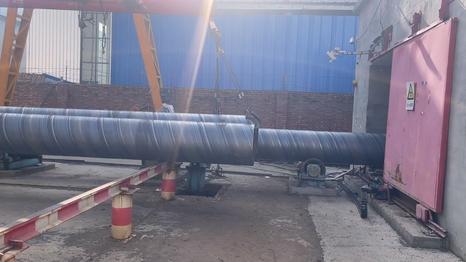
The creation of spiral welded steel pipes is a testament to engineering precision and material science. The process begins with a flat steel strip, carefully selected for its quality and properties. This strip is then fed into a specialized machine that spirally winds it around a mandrel, forming a continuous cylindrical shape. As the strip winds, the edges are brought together and welded seamlessly, creating a pipe with a continuous helical seam. This seam is not just a mark of the pipe's formation; it is a crucial element that contributes to the pipe's overall strength and integrity.
The welding process itself is a critical step, requiring high-temperature fusion to ensure a strong bond between the edges. Advanced welding techniques, such as submerged arc welding (SAW), are often employed to achieve this. SAW involves feeding a wire electrode into the welding zone, where an arc is struck between the electrode and the base metal, creating a molten pool that solidifies into a strong weld. This method ensures a high-quality, defect-free seam that can withstand the rigors of use in demanding environments.
Once the pipe is formed and welded, it undergoes a rigorous inspection process to ensure its quality and integrity. Non-destructive testing methods, such as ultrasonic testing (UT) and radiographic testing (RT), are used to detect any potential defects or flaws in the weld seam. These tests provide a detailed analysis of the pipe's internal structure, ensuring that it meets the highest standards of quality and safety.
2.Applications: Versatility Across Industries
The versatility of spiral welded steel pipes is one of their most compelling features, making them suitable for a wide range of applications across various industries.
2.1 Oil and Gas Pipelines
In the oil and gas industry, where the transportation of hydrocarbons over long distances is a daily occurrence, spiral welded steel pipes are the backbone of the pipeline network. Their high strength and resistance to internal pressures make them ideal for carrying oil and gas from production sites to refineries and distribution centers. The helical seam provides additional strength, allowing the pipes to withstand the high pressures and corrosive environments encountered in these applications.
2.2 Water Transmission
Water transmission systems, especially those requiring large-diameter pipes to handle high water volumes and pressures, also rely heavily on spiral welded steel pipes. These pipes are used in water supply networks, irrigation systems, and even in the construction of dams and reservoirs. Their durability and resistance to corrosion ensure that they can withstand the test of time, providing a reliable and long-lasting solution for water management.
2.3 Structural Applications
In the field of structural engineering, spiral welded steel pipes find applications in bridges, piers, and other projects where strength and durability are crucial. Their ability to bear heavy loads and resist deformation under stress makes them an excellent choice for these applications. The pipes can be used as columns, beams, or even as part of the foundation, providing a sturdy and reliable framework for the structure.
3.Advantages: The Compelling Reasons to Choose Spiral Welded Steel Pipes
The advantages of spiral welded steel pipes are numerous and significant, making them the preferred choice for many large-diameter projects.
3.1 High Strength-to-Weight Ratio
One of the most notable advantages of spiral welded steel pipes is their high strength-to-weight ratio. Despite their robust construction, these pipes are relatively lightweight, making them easy to handle and install. This characteristic is particularly beneficial in applications where the pipes need to be transported over long distances or installed in challenging environments, such as offshore platforms or mountainous regions.
3.2 Cost-Effective Solution
For large-diameter pipes, spiral welding is often more cost-effective than other manufacturing methods, such as longitudinal welding or seamless pipe production. The spiral winding process minimizes material wastage, as the steel strip is used efficiently to form the pipe. Additionally, the simplified production process reduces labor costs and production time, resulting in a more economical solution for large-scale projects.
3.3 Resistance to Internal Pressures
The helical seam of spiral welded steel pipes provides additional strength, allowing them to withstand high internal pressures without failing. This characteristic is particularly important in applications such as oil and gas pipelines, where the pipes must be able to handle the pressure of the flowing hydrocarbons. The seam's strength also ensures that the pipe can resist deformation under stress, maintaining its integrity and preventing leaks or ruptures.
3.4 Durability and Longevity
Spiral welded steel pipes are known for their durability and longevity. Their robust construction and resistance to corrosion ensure that they can withstand the test of time, even in harsh environments. This characteristic reduces the need for frequent maintenance or replacement, resulting in long-term cost savings for the project owner.
Conclusion
In conclusion, spiral welded steel pipes are a reliable and cost-effective solution for large-diameter projects that require high strength and resistance to internal pressures. Their unique manufacturing process, diverse applications, and numerous advantages make them the preferred choice in many industries. Whether it's transporting oil and gas, managing water resources, or constructing sturdy structures, spiral welded steel pipes provide the strength, durability, and versatility needed to get the job done. For high-quality spiral welded steel pipes that meet industry standards, consider our range of products, including ASTM A106 Gr.B / A53 Gr.B / API 5L X42 Hot-Dipped Galvanized BSPP Threaded Seamless Steel Pipe (though seamless, it showcases our commitment to quality) and other related products. With our expertise and commitment to excellence, we are your trusted partner in all your large-diameter pipe needs.【Back to Comprehensive Guide to Welded and Seamless Pipes in Construction and Industry】