
Introduction
In the vast and intricate world of piping systems, the choice between seamless and welded pipes stands as a pivotal decision that can significantly impact the success, efficiency, and cost-effectiveness of any project. Whether it's for industrial applications, construction projects, or fluid transportation, understanding the fundamental differences between these two types of pipes is crucial. This article aims to provide a comprehensive and detailed comparison of seamless and welded pipes, delving into their manufacturing processes, inherent strengths and weaknesses, as well as their diverse applications. By the end, you will be equipped with the knowledge necessary to make an informed decision tailored to the specific requirements of your project.
1.Manufacturing Process Comparison
1.1 Seamless Pipes
The production of seamless pipes is a meticulous and highly controlled process that begins with solid billets of steel. These billets are heated to a precise temperature, making them malleable enough to be extruded into a hollow tube. This extrusion process is carried out with great precision to ensure that the resulting tube has a uniform wall thickness throughout its length. Once the tube is formed, it undergoes a series of rolling operations to achieve the desired size and dimensions. The absence of any welding in this process means that seamless pipes are free from weld seams, which can be potential weak points in a piping system.
The manufacturing of seamless pipes requires specialized equipment and highly skilled labor, which contributes to their relatively higher cost compared to welded pipes. However, the uniformity and integrity of the pipe structure make them ideal for applications where strength and reliability are of utmost importance.
1.2 Welded Pipes
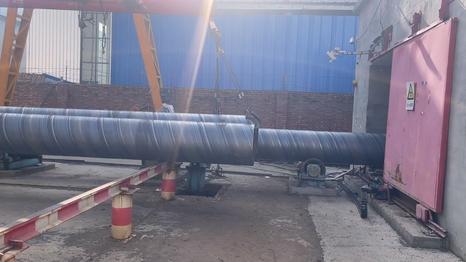
In contrast, welded pipes are created through a process that involves joining steel sheets or strips together to form a continuous length of pipe. The first step in this process is to cut the steel sheets or strips into the desired width and length. These pieces are then formed into a cylindrical shape using rollers or other forming equipment. Once the cylindrical shape is achieved, the edges of the steel are brought together and welded using various welding techniques, such as electric resistance welding (ERW), submerged arc welding (SAW), or high-frequency induction welding (HFIW).
While the welding process does introduce a potential weak point at the seam, modern welding techniques have significantly improved the integrity and strength of welded pipes. These techniques ensure that the weld seam is as strong as, or even stronger than, the base metal, making welded pipes suitable for a wide range of applications. Additionally, the manufacturing process of welded pipes is generally more cost-effective, especially for larger diameters, as it requires less material and energy compared to the production of seamless pipes.
2.Strengths and Weaknesses
2.1 Seamless Pipes
One of the most significant advantages of seamless pipes is their higher strength. The absence of weld seams eliminates the risk of seam failure, which can be a critical concern in high-pressure applications. Seamless pipes can withstand higher internal pressures without deforming or rupturing, making them ideal for use in industries such as oil and gas exploration, where the pipes are subjected to extreme pressures and temperatures.
However, seamless pipes also have some limitations. They are generally more expensive than welded pipes due to the complex manufacturing process and the higher cost of raw materials. Additionally, the size availability of seamless pipes is limited compared to welded pipes. The production of seamless pipes becomes increasingly difficult and costly as the diameter of the pipe increases, which can be a constraint for projects that require large-diameter pipes.
2.2 Welded Pipes
Welded pipes offer several advantages that make them a popular choice for many projects. Firstly, they are cost-effective, especially for larger diameters. The manufacturing process of welded pipes is less complex and requires less material, resulting in lower production costs. This cost-effectiveness is further enhanced by the wide availability of welded pipes in various sizes and specifications, making it easier to find the right pipe for your project.
Another advantage of welded pipes is their versatility. They can be manufactured in a variety of lengths, diameters, and wall thicknesses to meet the specific requirements of different applications. Additionally, welded pipes can be produced using different types of steel, such as carbon steel, stainless steel, and alloy steel, providing flexibility in terms of material selection.
However, welded pipes also have some weaknesses. The weld seam can be a potential weak point, although modern welding techniques have significantly reduced this risk. In applications where the pipe is subjected to high internal pressures or extreme temperatures, the weld seam may require additional inspection and testing to ensure its integrity. Additionally, the surface finish of welded pipes may not be as smooth as that of seamless pipes, which can be a consideration in applications where fluid flow characteristics are important.
3.Applications Comparison
3.1 Seamless Pipes
Seamless pipes are preferred in applications where high strength and reliability are critical. In the oil and gas industry, seamless pipes are used for drilling, production, and transportation of oil and gas. They are also widely used in boiler tubes, where they are subjected to high temperatures and pressures. Hydraulic systems, which require pipes that can withstand high internal pressures without leaking, also rely on seamless pipes for their operation.
3.2 Welded Pipes
Welded pipes, on the other hand, are widely used in low-pressure fluid transportation applications, such as water supply and drainage systems, where cost-effectiveness and availability are important considerations. They are also commonly used in structural applications, such as building construction, bridges, and scaffolding, where the pipes are used to support loads and provide stability. Additionally, welded pipes are used in handrail fittings, where their versatility and ease of installation make them an ideal choice.
Conclusion
Choosing between seamless and welded pipes ultimately depends on the specific requirements of your project. If your project involves high-pressure or high-temperature applications where strength and reliability are of utmost importance, seamless pipes are the ideal choice. Their uniform wall thickness and absence of weld seams make them suitable for demanding applications such as oil and gas exploration, boiler tubes, and hydraulic systems.
On the other hand, if your project requires a cost-effective and versatile solution for low-pressure fluid transportation or structural applications, welded pipes offer a compelling option. Their wide availability in various sizes and specifications, along with their cost-effectiveness, make them suitable for a wide range of projects.
For high-quality pipes that meet industry standards, our company offers a comprehensive range of both seamless and welded options. Our Hydraulic Threaded Tube | DIN 3852 Hydraulic Pipe for High-Pressure Machinery is a seamless option that provides exceptional strength and reliability for hydraulic systems. Meanwhile, our API 5CT Line Pipe with BTC Thread | Oil Casing & Tubing API 5B Round/Buttress Thread is a welded option that showcases our versatility and ability to meet the diverse needs of the oil and gas industry. Whatever your project requirements may be, we have the right pipe solution for you.
【Back to Comprehensive Guide to Welded and Seamless Pipes in Construction and Industry】